Why it matters
Why accurate distances change your score.
Shot Scope's 2025 Annual Report analysed over 74 million shots by amateur golfers worldwide. The finding that matters most: scoring improvements come not from longer drives or swing changes, but from better decision-making on approach shots. Golfers who track their game with Shot Scope save an average of 4.1 strokes after 30 rounds, and the single most impactful change is knowing exactly how far you have to the flag.
The problem is not ball striking. It is club selection. Data from Arccos Golf shows that 54% of amateur golfers leave their approach shots short of the flag. Not because they cannot hit the distance; they consistently underestimate how far they need to hit it. A rangefinder does not improve your swing. It removes the guesswork that was costing you strokes before the club left your hands.
On a hilly course, elevation compounds the problem. A 150-yard uphill approach can play as 165 yards. A downhill par 3 measuring 120 yards might play as 100. Without slope, you are making those adjustments by feel, and most golfers consistently get them wrong in the same direction.
The five decisions
Five decisions before you buy.

Do you actually need a rangefinder, or would a GPS watch serve you better?
A laser rangefinder and a GPS watch are not competing products; they are different tools for different purposes. A laser rangefinder gives you an exact distance to any target you can see: the flag, a bunker lip, a tree. A GPS watch gives you automatic distances to known course features without having to aim at anything.
For most UK club golfers playing courses where pin position matters , on most courses, most of the time, a laser rangefinder is the more useful device. You can measure to the actual flag position rather than the centre of the green, which can easily be 20 yards different on a deep green.
That said, GPS watches suit specific types of golfers well: those who play fast and do not want to stop and aim; those who use course overview data to plan tee shots; and those who already play with a GPS watch and want to complement it rather than replace it. Some golfers carry both: a GPS watch for course overview and a laser rangefinder for precise approach distances. For most single-device golfers, the laser rangefinder is the stronger choice.
Do you need slope?
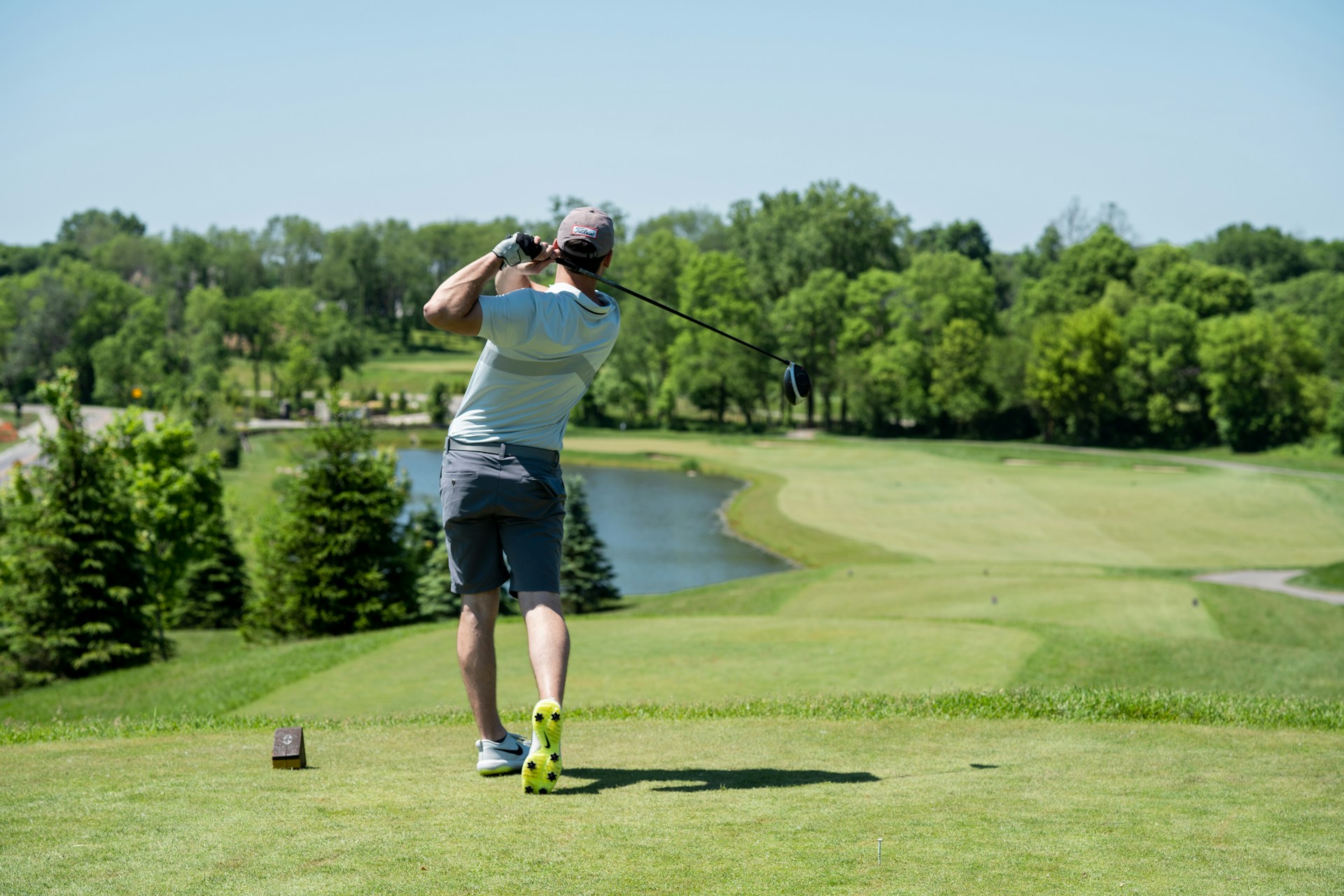
Slope is the single most valuable feature on a modern rangefinder for the vast majority of UK club golfers, and British courses make the case clearly. From the undulating moorland of Yorkshire to the heathland of Surrey to the links of Scotland, elevation change is a constant factor. The flat course is the exception, not the rule.
A slope rangefinder does not just give you a number. It gives you the right number: the plays-as distance that accounts for whether the shot is uphill or downhill. Most golfers instinctively under-adjust for uphill and over-adjust for downhill, costing strokes on both sides.
The rules position is clear. Under R&A Rule 4.3, slope must be disabled for competition play. Any slope rangefinder sold since 2016 can be made tournament legal by switching slope off. The rule changed specifically allows this. An LED indicator, a colour-coded faceplate, or a visible switch confirms compliance. Buying a slope rangefinder does not mean you cannot use it in your club medal.
Our view: unless you exclusively play competition golf and never practise with slope on, a slope rangefinder is the right buy. The question is which slope mechanism suits you best. See the tournament legality section below.
Laser, GPS hybrid, or smart/connected?
In 2026 the rangefinder market has split into three distinct tiers.
Standard laser rangefinders measure distance to any target you aim at. They are fast, reliable, and the simplest technology. The best ones, including Bushnell, Nikon, and Shot Scope, have decades of refinement behind them. Most golfers should start here.
Hybrid GPS-laser rangefinders combine laser precision with GPS course data in one device. The Garmin Z82 shows a full 2D course map in the viewfinder alongside laser distances. The Bushnell Tour Hybrid gives slope-adjusted GPS front/centre/back in the viewfinder without a phone. These devices cost more but genuinely replace two devices for golfers who use both.
Smart and connected rangefinders , such as the Blue Tees Captain Pro, FlightScope i4, Voice Caddie SL3, and Mileseey GenePro G1, go further. They factor wind, temperature, elevation and air density into their recommendations. They connect to launch monitors. They learn your club distances and suggest the right club in the viewfinder. This is golf technology converging into a single device. The tradeoff is app dependency, charging management, and a learning curve.
Our view: most club golfers should buy a standard laser with slope. Golfers who actively use GPS data for course management should consider a hybrid. Golfers who are data-oriented, own a launch monitor, or genuinely want AI club suggestions should look at the connected tier.
What magnification and display do you actually need?
Magnification is one of the most commonly misunderstood specifications in rangefinder marketing. The Golf Monthly test team put it plainly: do not get distracted by large range numbers. What matters is whether you can read the display clearly in the conditions where you play.
Most golf rangefinders offer 6x or 7x magnification. 6x is entirely adequate for flag acquisition at standard approach distances. 7x brings distant targets slightly closer but can amplify hand shake, a genuine problem on exposed British courses in wind. Optical image stabilisation, available on the Nikon stabilised range and TecTecTec ULT-S Pro, actively counteracts this.
Display technology matters more than the headline number. LCD displays are adequate in most conditions. OLED displays, now available on the Shot Scope Pro L5 at £169, Voice Caddie L6, and Bushnell Pro XM, are noticeably sharper and brighter in the flat grey light that characterises British golf mornings. Auto-brightness adjustment, now standard on premium devices, removes the need to manually manage the display.
Dual-colour displays with a red and black toggle solve the visibility problem from the other direction. Shot Scope Pro ZR, TecTecTec KLYR, Blue Tees Series 3 Max E all offer this. In bright sunshine a red display can be harder to read; in low light a black display may struggle. The toggle removes the issue.
How important is build quality and weather resistance?
British golfers do not get to choose their weather. A rangefinder that struggles in rain is not fit for purpose on a Yorkshire course in October.
IP ratings tell you what a device can withstand. IPX4 means splash-resistant: adequate for light rain. IPX6 means jet-resistant: handles driving rain from any direction, which is what Bushnell's Tour series offers. IPX7 means submersible to 1 metre for 10 minutes, available on the Precision Pro Titan range and Blue Tees Captain Pro. IP67 means both fully dustproof and submersible, the highest standard available.
The Precision Pro Titan Slope and Titan Elite's aluminium shell is a genuine structural advantage over plastic-bodied competitors. If you regularly leave equipment on a cart or play in harsh conditions, the difference in durability is real.
Battery type is a related consideration. CR2 batteries are widely available but add running costs. USB-C rechargeable batteries, now available on the Bushnell Pro XM, A1 Slope, Precision Pro Titan range, Mileseey and Voice Caddie models, eliminate that cost but require remembering to charge. Dual power systems (Mileseey PF260: rechargeable primary plus CR2 backup) are the most practical solution for those who forget to charge.
Buying by handicap
Which rangefinder is right for your handicap?

Low
Handicap 0–12
You hit greens in regulation on roughly 1 in 3 approach shots. Every yard matters. You play competition golf regularly and need tournament compliance you can trust.
What you need: Slope with the clearest possible tournament compliance mechanism. Premium optics — you will notice display quality. Fast acquisition for pace of play. Consider connected features if you own a launch monitor or want AI club suggestions.
Top picks
- Bushnell Pro X3+— Premium optics, Visual JOLT, slope switch
- Nikon Coolshot Pro III Stabilized— Best optics, OIS for windy conditions
- Garmin Approach Z82— For the data-driven low handicapper who wants full course overlay
- Blue Tees Captain Pro— AI club suggestions from launch monitor data at £299
Mid
Handicap 13–20
You hit greens in regulation on roughly 1 in 5 approach shots. Club selection consistency — hitting the right club every time rather than occasionally — is where you gain most. Slope is particularly valuable here.
What you need: Reliable slope with a clear tournament compliance switch. A good display you can read in any light. Cart magnet if you ride. Consider GPS hybrid if you actively use course management data.
Top picks
- Shot Scope Pro ZR— Best value slope rangefinder under £300, free GPS app
- Bushnell Tour V6 Shift— Tour-proven reliability, Visual JOLT, IPX6
- Shot Scope Pro LX+— Adds GPS and shot tracking for data-oriented players
- Nikon Coolshot 50i GII— Strong optics, cart magnet, First Target Priority
High
Handicap 21–28
You are still learning consistent distances with your clubs. Accurate yardages help you build that knowledge faster — you will start to understand how each club actually performs for you rather than how far you think you hit it.
What you need: Reliable slope, simple operation, good value. You do not yet need every premium feature — a well-made mid-range device with slope will serve you well for several years.
Top picks
- Shot Scope Pro L5— OLED at £169 is exceptional value, strong review score
- Shot Scope Pro L2— The most reviewed Shot Scope laser, cart magnet, slope
- Nikon Coolshot 20i GIII— Lightest slope laser, great for walkers
- Mileseey PF260— Dual power, external switch, best value under £110
Beginner
Handicap 28+ / Beginner
You are building your game. Simple, reliable yardages to the flag are what you need — you do not yet need every premium feature. A good entry-level device with slope gives you the data to learn your distances properly.
What you need: Simple operation, slope, basic flag lock. Value is important — you may upgrade as your game develops.
Top picks
- Shot Scope Pro L2— Most reviewed, proven, affordable, cart magnet
- Mileseey PF260— Dual power, external switch at £109
- TecTecTec VPRO500— 104 reviews, reliable entry slope laser
- BenRoss Speedgolf— OLED at £139, available at American Golf
Tournament rules
What the R&A actually says.
The rules around rangefinders in competition are widely misunderstood. Here is the clear picture for UK club golfers.
Distance measuring devices are permitted in competition under the R&A and USGA Rules of Golf, but only under a local rule adopted by the committee running the event. The vast majority of UK club competitions use this local rule. Before using any device in competition, check the competition rules sheet or ask the secretary.
Slope must be completely disabled for competition play. Under R&A Rule 4.3a, any device that provides elevation-adjusted distances during competition , regardless of whether the golfer claims they did not use the slope number. If slope is accessible on the display, the device is non-conforming.
AI club recommendations, wind data, and plays-like distances are also prohibited in competition. Devices like the Blue Tees Captain Pro and FlightScope i4 must have these features disabled. The device itself is legal; the prohibited features must simply be off.
What to look for in a competition-legal rangefinder
Physical slope switch : not a menu toggle, not an app setting. A dedicated external switch that shows visually whether slope is on or off. The Precision Pro NX10's external green/grey switch, the TecTecTec pull-out faceplate, and Bushnell's Slope-Switch are the clearest implementations.
Visible compliance indicator : an LED light, a colour indicator, or a faceplate that others can see signals you are in non-slope mode. The Garmin Z82 external indicator light is specifically designed for this.
Important note for handicap submissions: The USGA has confirmed that Rule 4.3a technically applies in all rounds including casual play. In practice, most club golfers use slope in casual rounds without issue, but be aware that strictly speaking, competition rules apply when submitting a handicap score.
Technology explained
The technology explained plainly.
Laser vs GPS: how it works
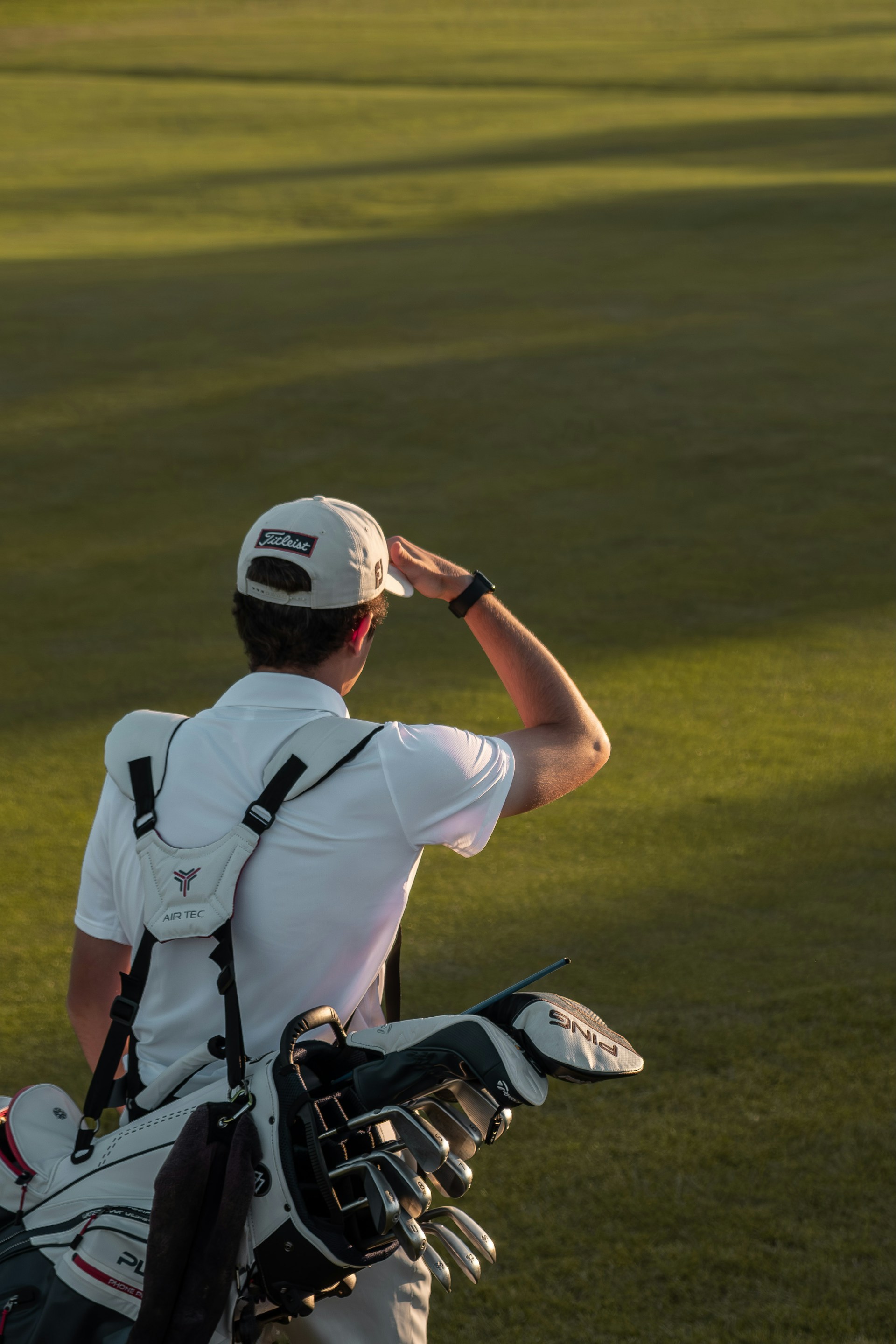
A laser rangefinder fires an invisible infrared laser pulse at your target and measures the time it takes for that pulse to return. At the speed of light, this gives a measurement accurate to within a yard at 500 metres. The technology is fundamentally simple and has been refined over 30 years of consumer devices.
GPS rangefinders use satellite positioning to calculate your location on a pre-mapped course. They can give distances to features anywhere on the course, including hazards, greens, and doglegs, without requiring line of sight. The limitation is that GPS distances are only as accurate as the course mapping, and typically cannot give distances to the exact flag position.
Slope technology
All slope rangefinders use an internal angle sensor (inclinometer) to measure the vertical angle between you and your target. The slope algorithm then applies a ballistic calculation to convert the measured angle and distance into a plays-as distance.
The quality of this calculation varies meaningfully between brands. Bushnell's Slope with Elements factors in temperature and altitude in addition to elevation. FlightScope's Environmental Optimiser adds real-time air density and kinematic viscosity. Mileseey's SmartSlope adds humidity and air pressure. These multi-factor calculations produce more accurate plays-as distances on courses at altitude or in unusual weather, though the difference is measurable rather than dramatic.
Optical image stabilisation
Nikon's Stabilized range, specifically the Coolshot Pro III and Pro II, uses optical image stabilisation technology borrowed from Nikon's camera division. The system actively counteracts hand shake and environmental movement by adjusting the optical path in real time.
The practical benefit is most noticeable in two situations: golfers with naturally less steady hands, and conditions with significant wind. On an exposed links course in a crosswind, an unstabilised rangefinder can struggle to hold on a distant flag long enough to acquire a reading. A stabilised device holds steady.
TecTecTec's ULT-S Pro offers a more affordable version of the same technology.
OLED vs LCD
LCD (Liquid Crystal Display) is the standard technology in most rangefinders. It is adequate in most conditions: clear in overcast British light, less clear in bright direct sunshine or very low light.
OLED (Organic Light Emitting Diode) displays produce their own light rather than relying on a backlight. They offer higher contrast, richer blacks, and significantly better readability in both very bright and very low light. The Shot Scope Pro L5 was the first Shot Scope rangefinder with OLED and the difference over the Pro L2 is immediately noticeable in the field.
Dual-colour displays (red and black toggle) address the same visibility problem differently: red is often easier to read in low contrast grey light; black is cleaner in bright sunshine.
Connected features and AI
The 2026 PGA Show marked a clear inflection point in rangefinder technology. Multiple brands, including Blue Tees, FlightScope, Bushnell, and Mileseey, are now building devices that do significantly more than measure distance.
The most practically useful connected feature is launch monitor integration. Devices like the Blue Tees Captain Pro and Bushnell Pro X3+ Link can receive your personal club carry distances from a compatible launch monitor and display AI-generated club recommendations in the viewfinder. The recommendation accounts for your actual measured distances, not the distances you think you hit it.
Wind integration via FlightScope i4 and Bushnell Pro X3+ pulls real-time wind speed and direction from weather station data and factors it into the plays-as distance. On British coastal courses where wind genuinely changes the club by two or three clubs, this is meaningful.
The tradeoff for all connected features: app dependency, phone requirement for some features, charging management, and a higher price. These are tools for golfers who will actively use them.
Our picks
The right answer for different buyers.
 Best overall
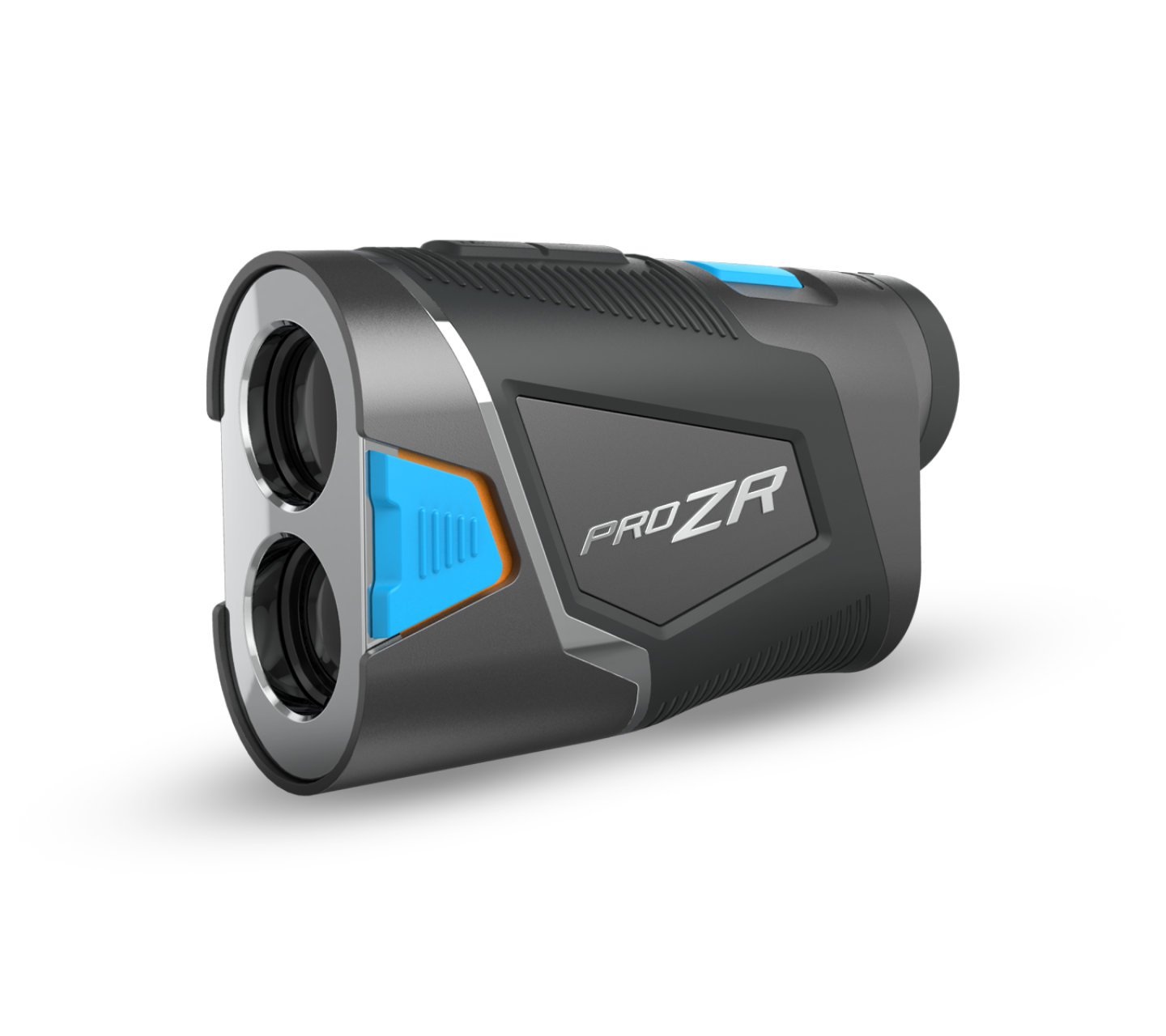
Shot Scope Pro ZR
The most complete rangefinder under £300. DuraShield build, 1,500 yard range, dual optics, free GPS app, no subscription.
Read full review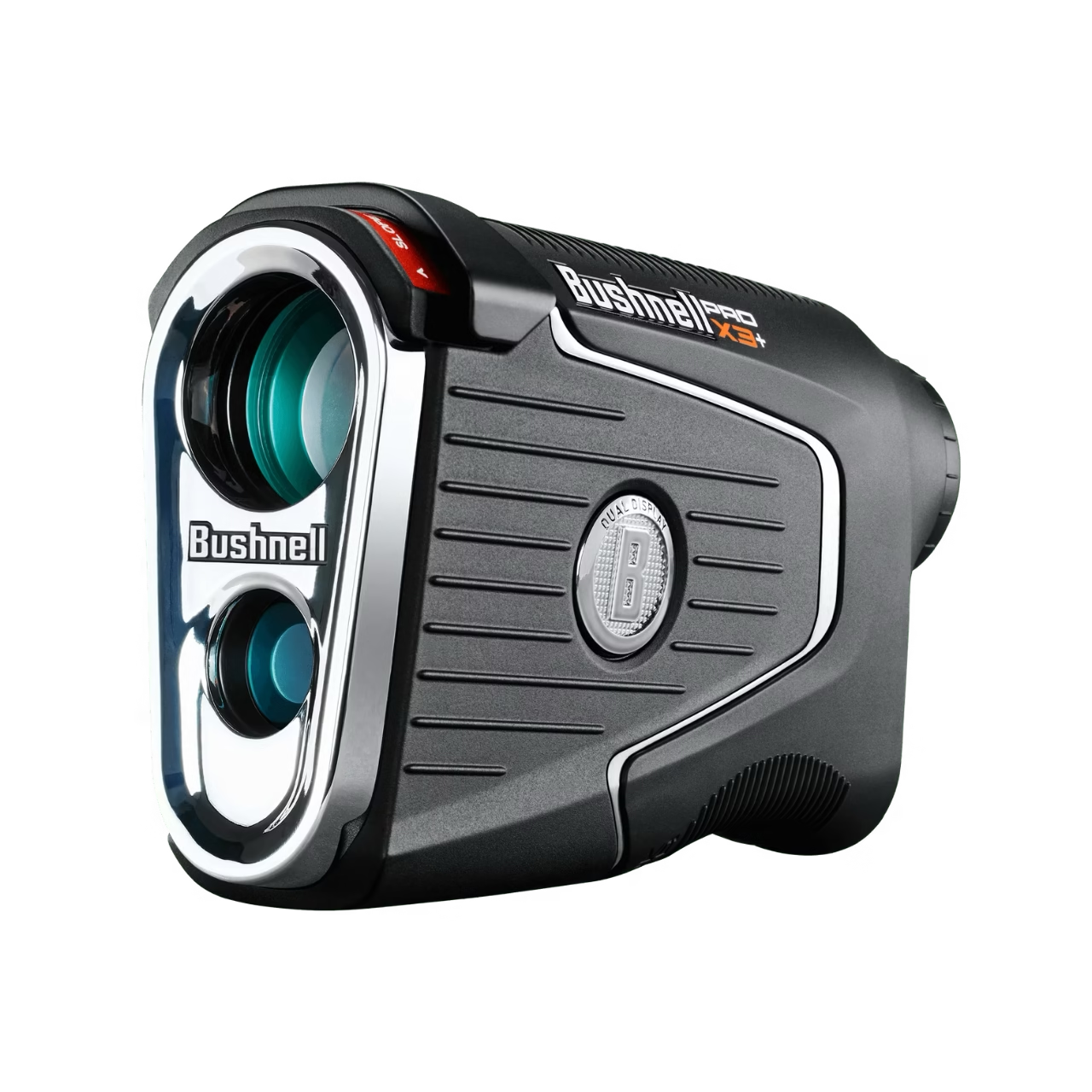 Best premium
Bushnell Pro X3+
The benchmark slope rangefinder. Premium optics, Visual JOLT, BITE mount, wind data via app. Worth every penny if you will use it.
Read full review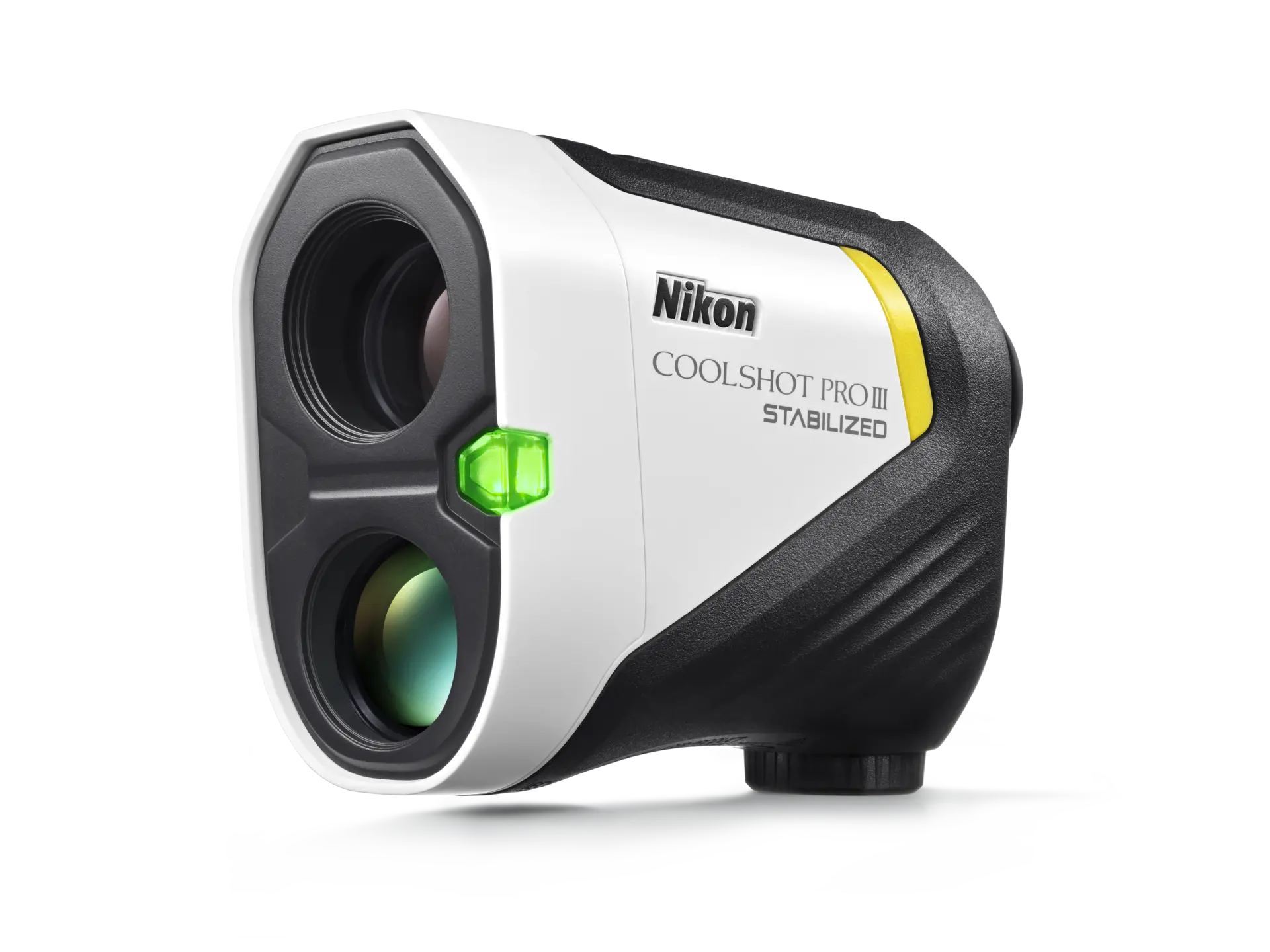 Best for shaky hands
Nikon Coolshot Pro III Stabilized
Optical image stabilisation from Nikon's camera division. The clearest, steadiest viewfinder at this price.
Read full review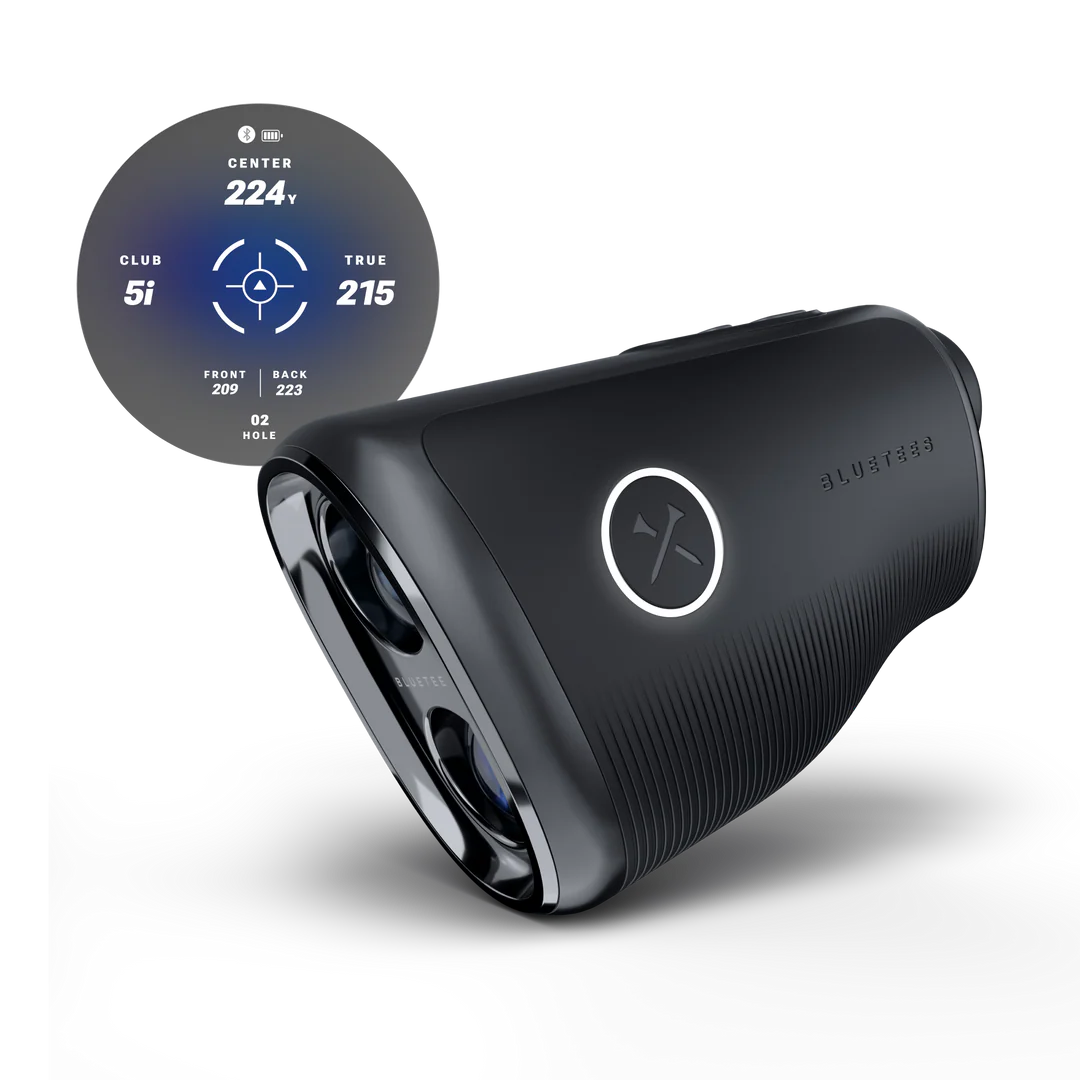 Best for data golfers
Blue Tees Captain Pro
True Distance (slope + wind + elevation + temperature), AI club recommendations, IP67, GPS. The most connected rangefinder under £300.
Read full review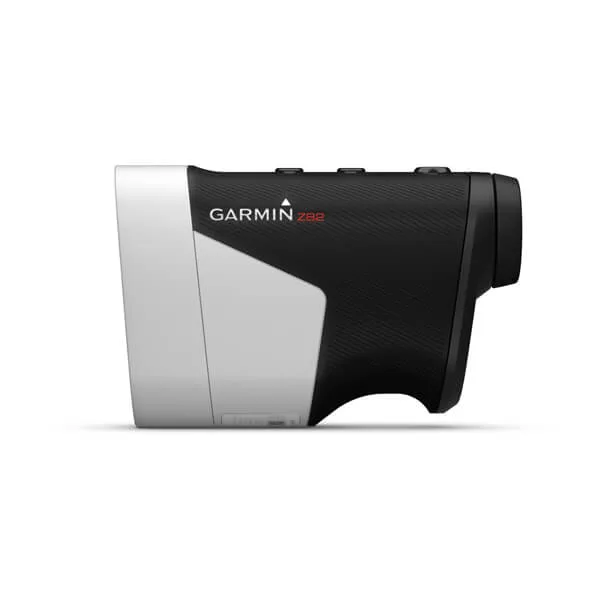 Best hybrid
Garmin Approach Z82
The only rangefinder with a full 2D course map in the viewfinder. Within 10 inches accuracy. For golfers who want everything from one device.
Read full review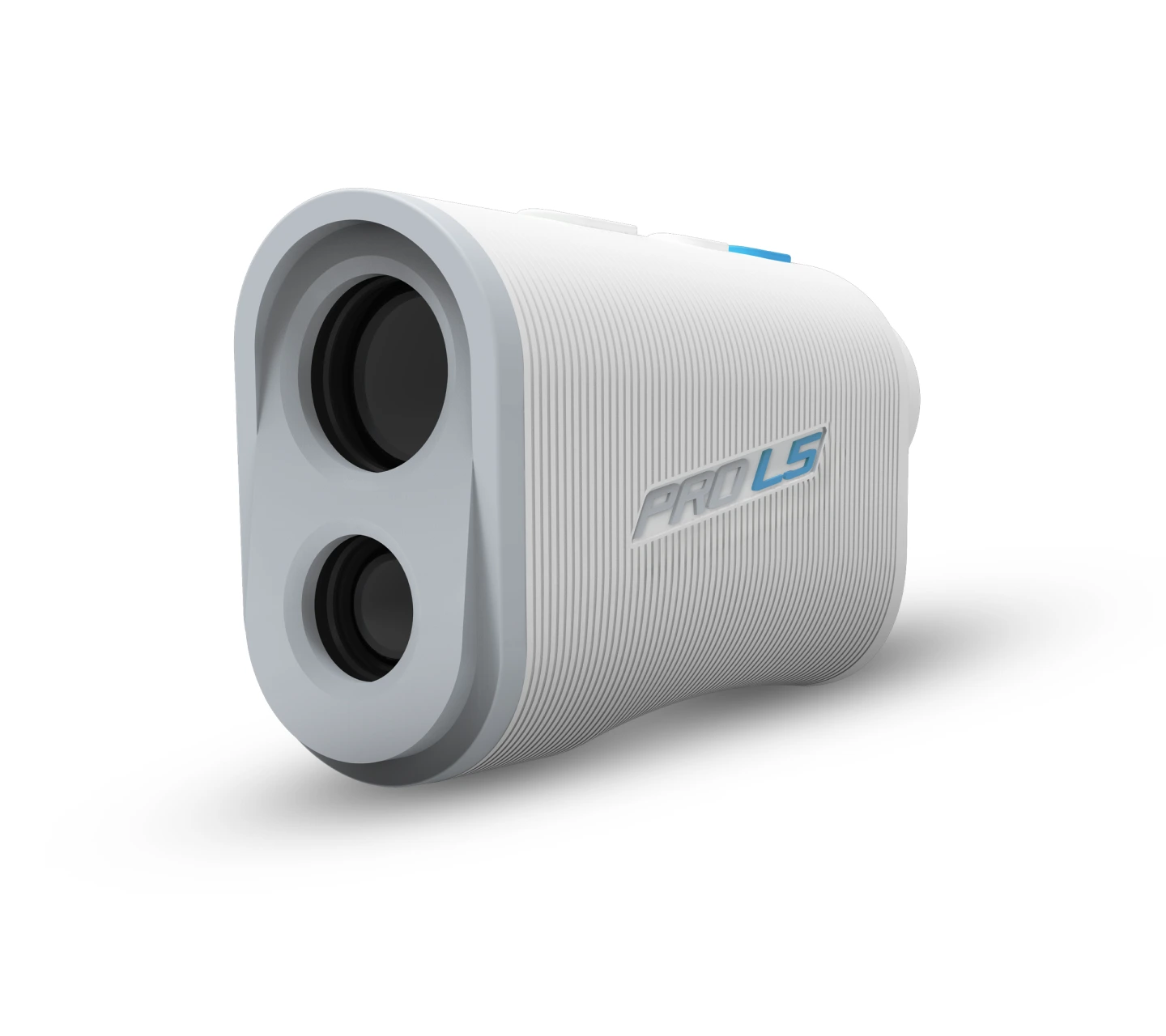 Best value
Shot Scope Pro L5
OLED display at £169. Outstanding. Nothing else comes close at this price.
Read full review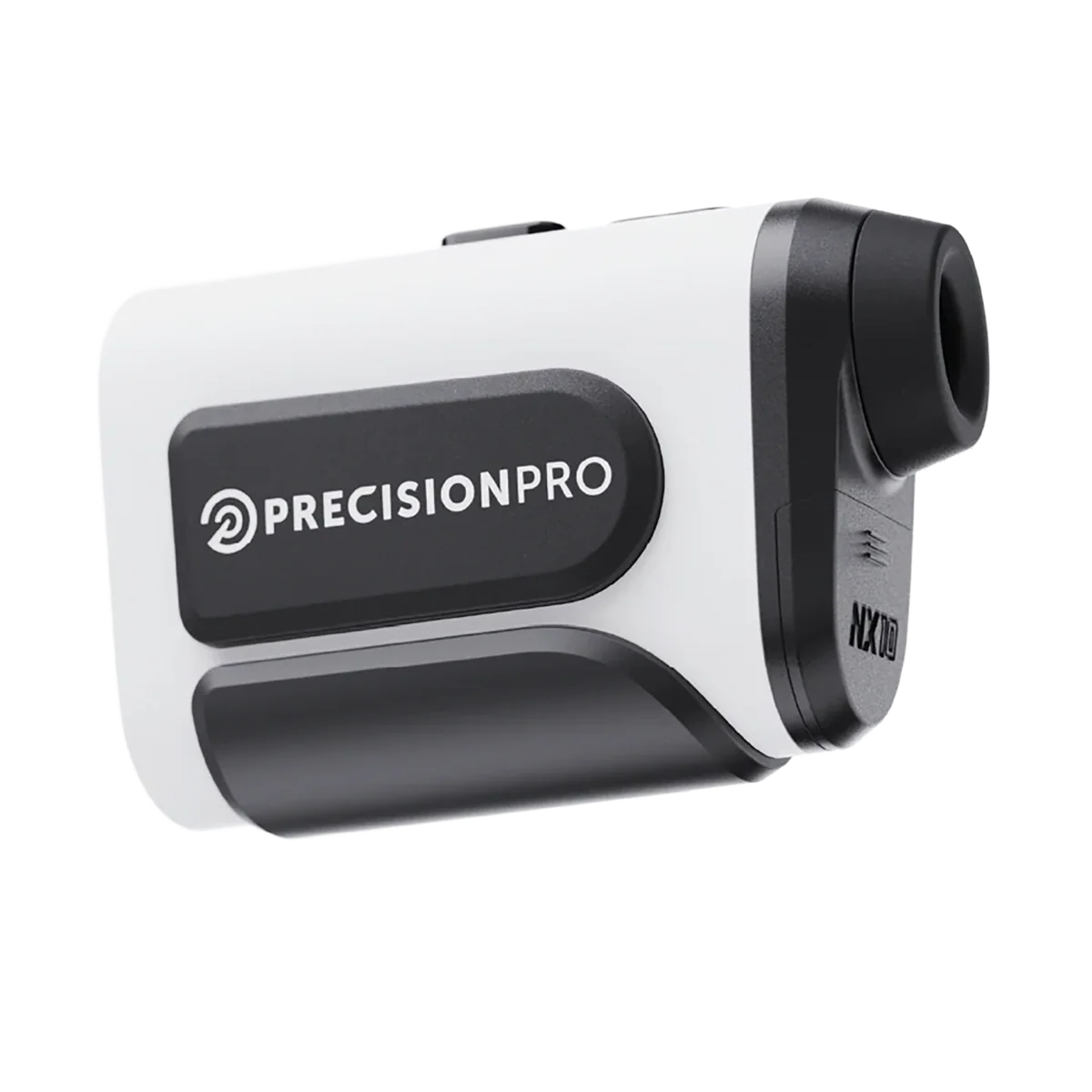 Best for competition
Precision Pro NX10
External slope switch with green LED indicator. The clearest competition compliance mechanism in the category.
Read full review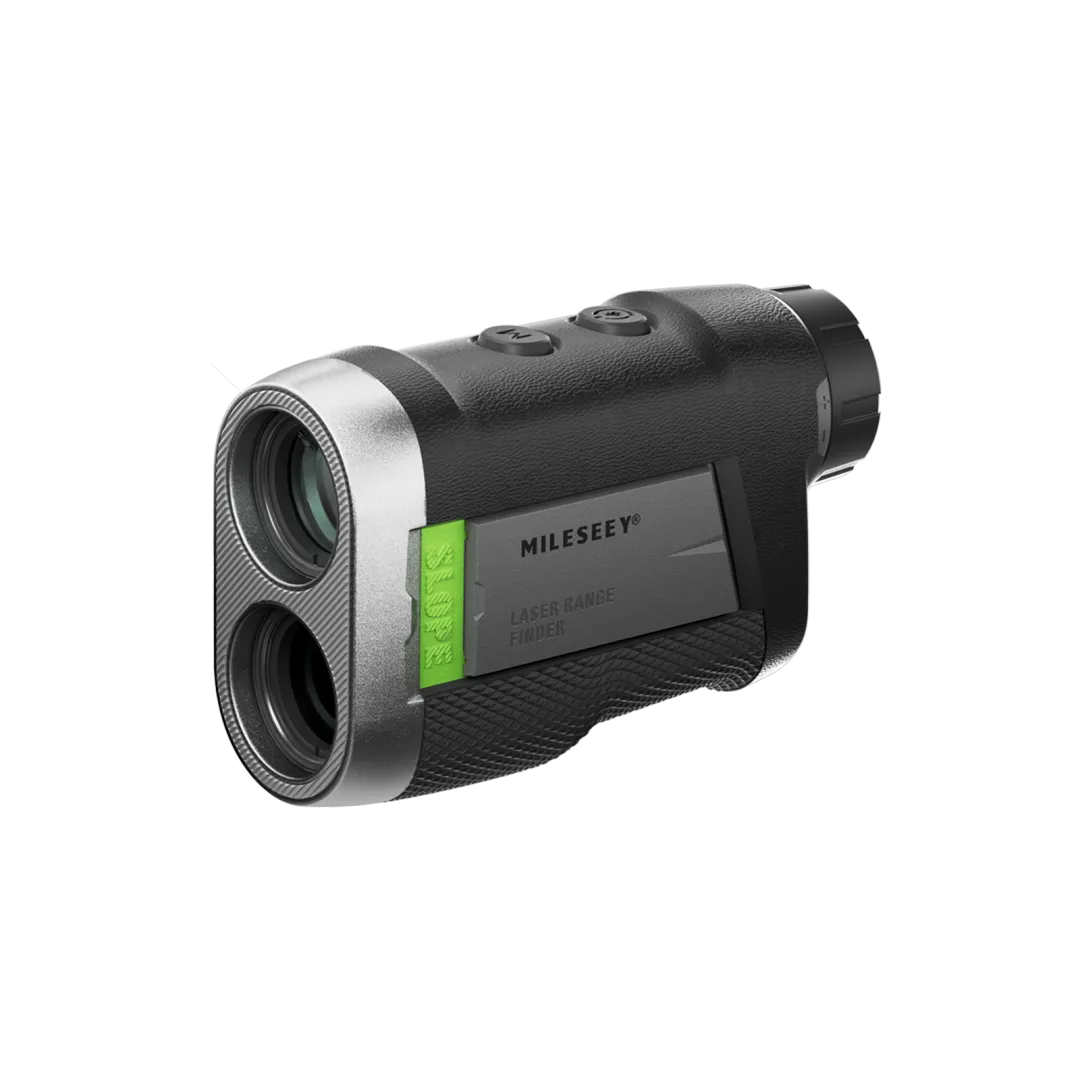 Best under £110
Mileseey PF260
Dual power, external switch, 5-year guarantee at £109. The best value entry slope rangefinder available.
Read full review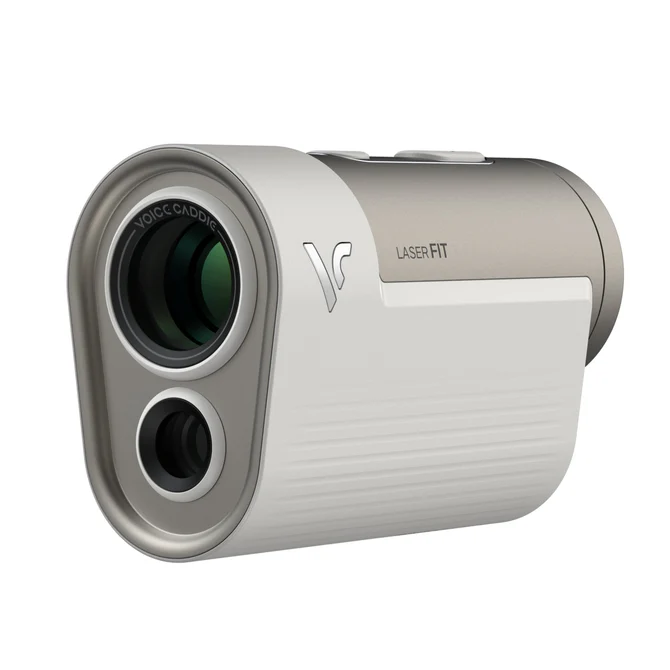 Best lightweight
Voice Caddie Laser Fit
113g. The lightest rangefinder available. Rechargeable. Ball to Pin mode. 4.9 stars from verified buyers.
Read full review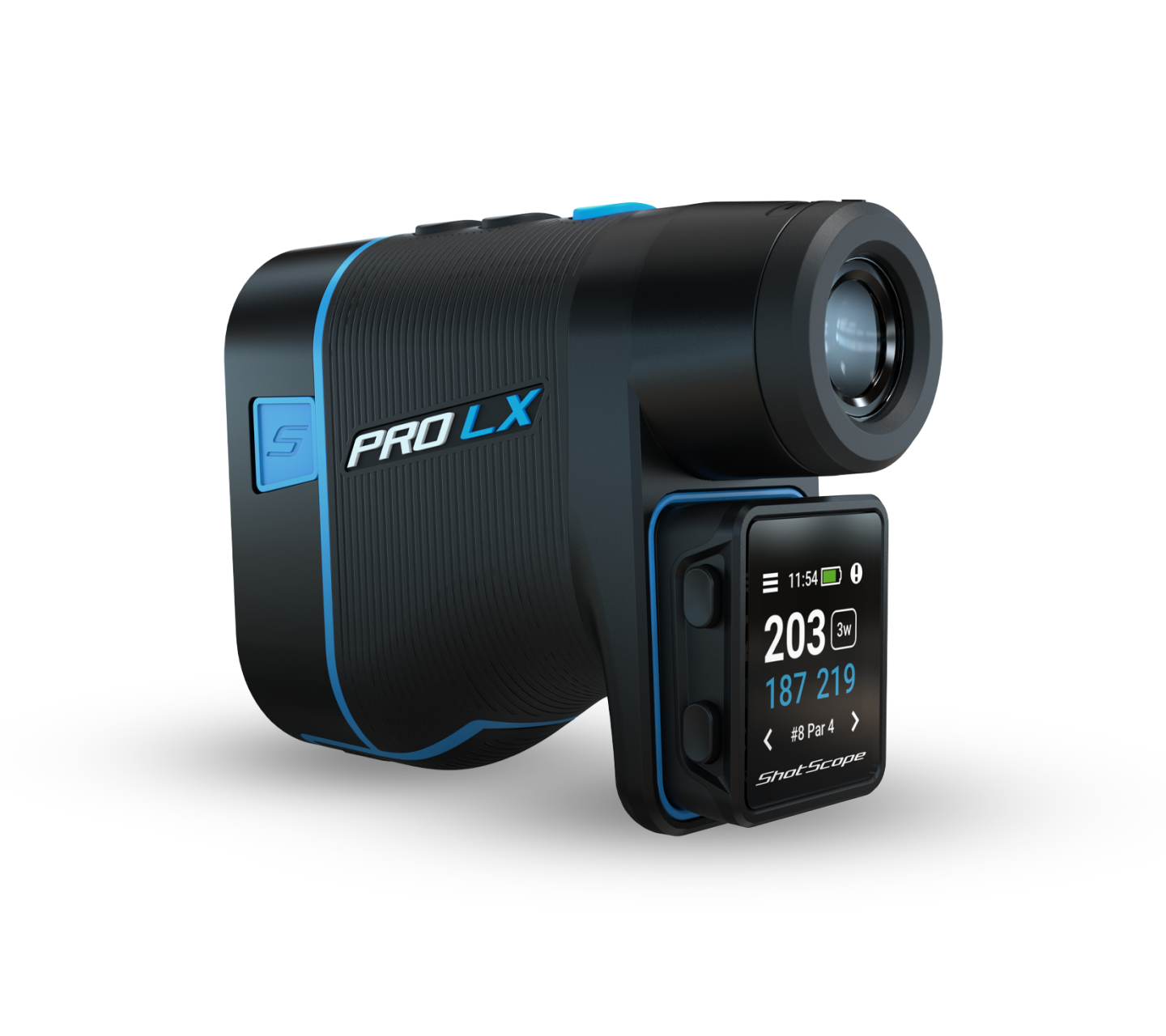 Best for cart golfers
Shot Scope Pro LX+
Three devices in one. Laser, GPS, shot tracking. Detachable H4 handheld. No subscription fees.
Read full review
Full comparison
Every featured product, side by side.
| Product | UK Price | Max Range | Slope | Magnification | Lock-On | Subscription | Amazon |
|---|---|---|---|---|---|---|---|
| BenRoss Speedgolf Rangefinder | £139 | — | Yes | — | Yes | None | — |
| Blue Tees Captain Air | £249 | 1,000 yards | Yes | 6× | Yes | None | — |
| Blue Tees Captain Pro | £299 | 1,200 yards | Yes | 7× | Yes | Optional | — |
| Blue Tees Series 3 Max E | £199 | 900 yards | Yes | 6× | Yes | None | — |
| Bushnell A1 Slope | £279 | 1,300 yards | Yes | 6× | Yes | None | — |
| Bushnell Pro X3+ | £549 | 1,300 yards | Yes | 7× | Yes | None | — |
| Bushnell Pro XM | £469 | 1,300 yards | Yes | 6× | Yes | None | — |
| Bushnell Tour Hybrid | £499 | 1,300 yards | Yes | 6× | Yes | None | — |
| Bushnell Tour V6 | £299 | 1,300 yards | No | 6× | Yes | None | View → |
| Bushnell Tour V6 Shift | £349 | 1,300 yards | Yes | 6× | Yes | None | — |
| Bushnell Tour V7 Shift | £329 | 1,300 yards | Yes | 6× | Yes | None | — |
| Fazer XR5 | £89 | — | Yes | — | — | None | — |
| FlightScope i4 | £370 | 1,000 yards | Yes | — | Yes | None | — |
| Garmin Approach Z30 | £329 | 400 yards | No | 6× | Yes | None | — |
| Garmin Approach Z82 | £499 | 450 yards | Yes | 6× | Yes | Optional | — |
| Mileseey GenePro G1 | £499 | 1,300 yards | Yes | 6× | Yes | None | — |
| Mileseey GenePro S1 | £799 | 2,000 yards | Yes | 7.5× | Yes | None | — |
| Mileseey IONME2 | £399 | — | Yes | — | Yes | None | — |
| Mileseey PF260 Tour | £109 | 1,100 yards | Yes | 6× | Yes | None | — |
| Nikon Coolshot 20 GIII | £149 | 800 yards | No | 6× | Yes | None | — |
| Nikon Coolshot 20i GIII | £179 | 800 yards | Yes | 6× | Yes | None | — |
| Nikon Coolshot 50i | £199 | — | Yes | 6× | Yes | None | — |
| Nikon Coolshot 50i GII | £249 | 1,200 yards | Yes | 6× | Yes | None | — |
| Nikon Coolshot Lite Stabilized | £349 | — | Yes | — | Yes | None | — |
| Nikon Coolshot Pro II Stabilized | £489 | — | Yes | 6× | Yes | None | — |
| Nikon Coolshot Pro III Stabilized | £409 | 1,200 yards | Yes | 6× | Yes | None | — |
| Precision Pro NX9 | £199 | 999 yards | Yes | 6× | Yes | None | — |
| Precision Pro NX10 | £249 | 999 yards | Yes | 6× | Yes | None | — |
| Precision Pro Titan Elite | £399 | 999 yards | Yes | 6× | Yes | None | — |
| Precision Pro Titan Slope | £299 | 999 yards | Yes | 6× | Yes | None | — |
| Shot Scope Pro L2 | £149 | 700 yards | Yes | 6× | Yes | None | — |
| Shot Scope Pro L5 | £169 | 1,300 yards | Yes | 7× | Yes | None | — |
| Shot Scope Pro LX | £249 | 900 yards | Yes | 7× | Yes | None | — |
| Shot Scope Pro LX+ | £349 | 900 yards | Yes | 7× | Yes | None | — |
| Shot Scope Pro X | £149 | 800 yards | Yes | 6× | Yes | None | — |
| Shot Scope Pro ZR | £299 | 1,500 yards | Yes | 6× | Yes | None | — |
| TecTecTec KLYR | £159 | — | Yes | — | — | None | — |
| TecTecTec PINM8 Pro | £139 | 875 yards | Yes | — | Yes | None | — |
| TecTecTec ULT-S Pro | £199 | 1,000 yards | Yes | — | Yes | None | — |
| TecTecTec ULT-X | £199 | 1,000 yards | Yes | — | Yes | None | — |
| TecTecTec VPRO500 | £89 | 800 yards | Yes | 6× | No | None | — |
| TecTecTec VPRO500S | £149 | 540 yards | Yes | 6× | Yes | None | — |
| Voice Caddie L6 | £199 | 1,000 yards | Yes | 6× | Yes | None | — |
| Voice Caddie Laser Fit | £169 | 800 yards | Yes | 6× | Yes | None | — |
| Voice Caddie SL3 | £449 | 1,000 yards | Yes | 6× | Yes | None | — |
| Voice Caddie TL1 | £279 | 1,000 yards | Yes | 6× | Yes | None | — |
Prices checked May 2026. Max range is manufacturer-quoted maximum; typical flagstick range is lower. Lock-on refers to vibration/audio confirmation of flag acquisition. All models listed are tournament-legal in non-slope mode.
Sub-category · Laser
Laser Rangefinders
UK price range
£89 – £350
Pure point-and-shoot lasers for golfers who want flag-locked yardages without slope correction or extras.
 Top Pick
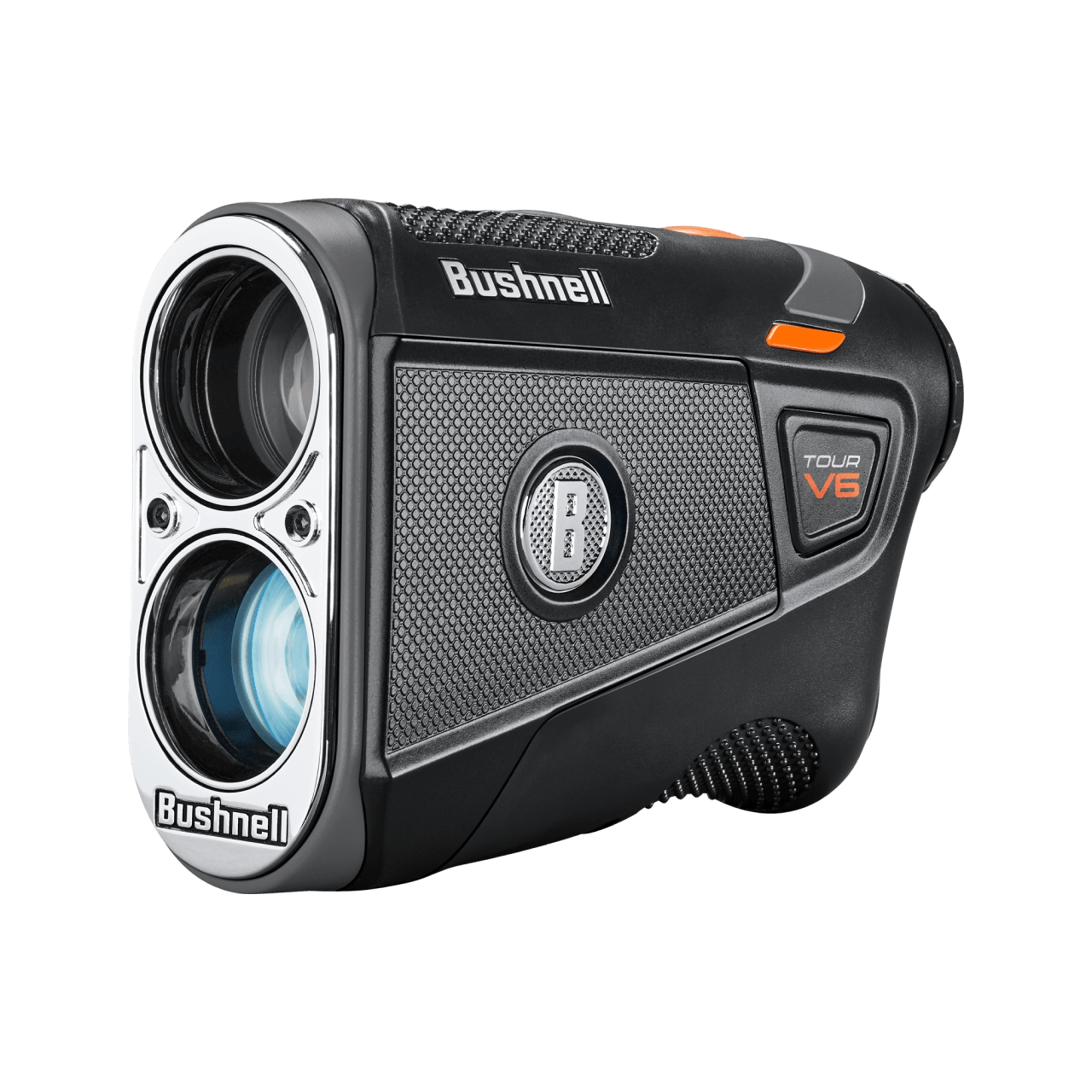
Bushnell Tour V6
The benchmark no-frills laser
£299
Review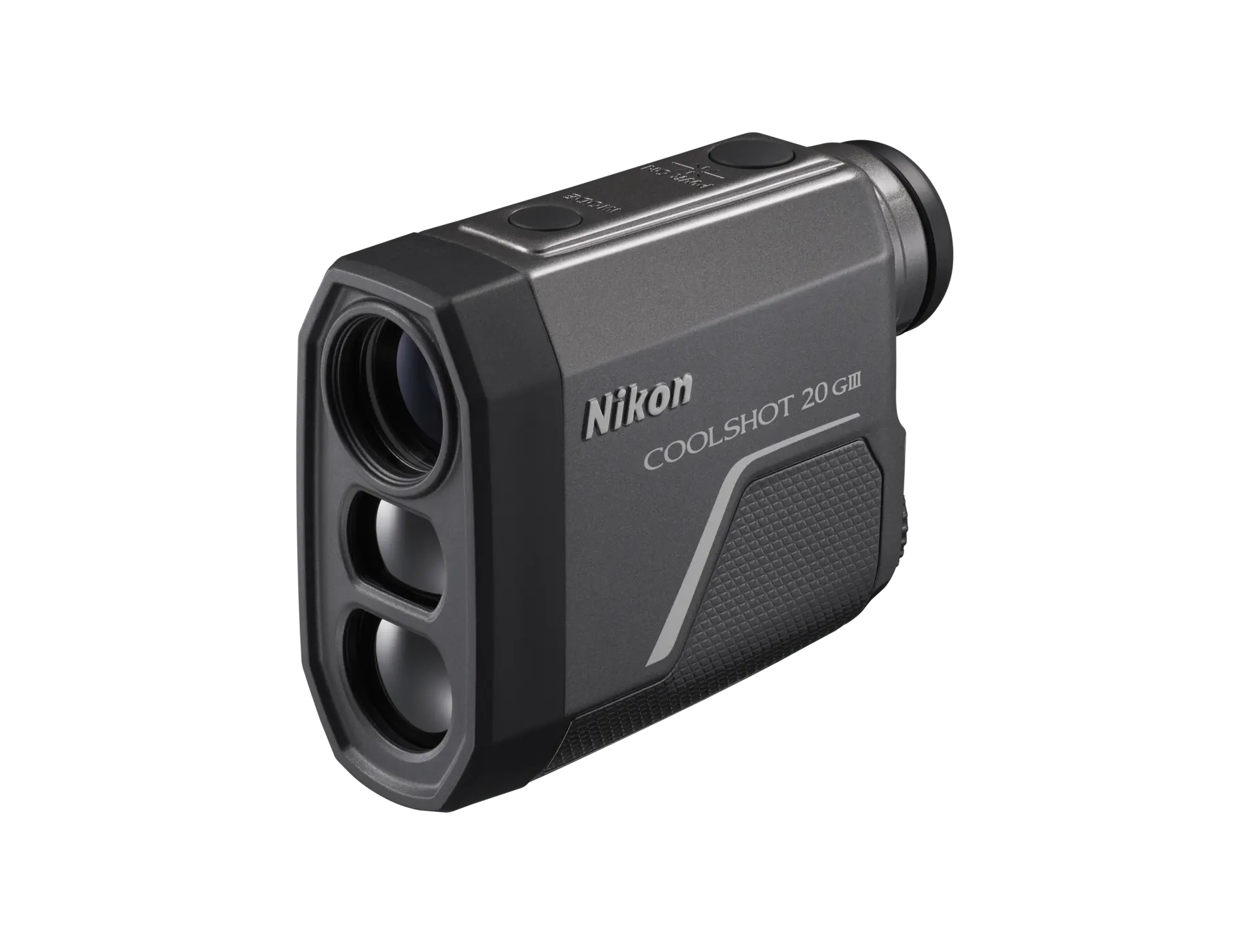 Recommended
Nikon Coolshot 20 GIII
The lightest Nikon laser — 130g, no slope, First Target Priority and 10,000 measurement battery life
£149
Review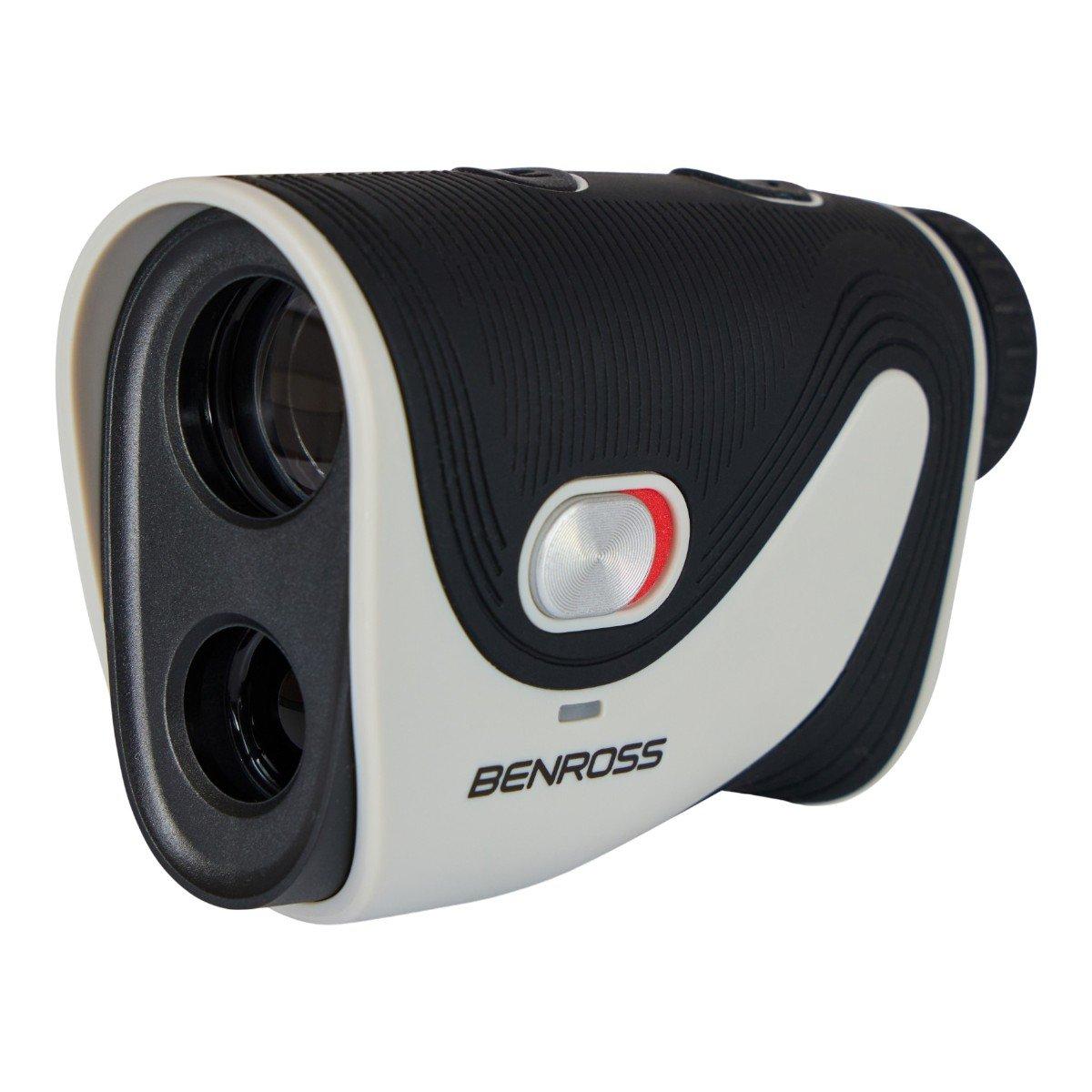 Also Available
BenRoss Speedgolf Rangefinder
Compact OLED slope laser with USB-C rechargeable battery — 30% smaller than standard rangefinders
£139
Review
Sub-category · Laser + Slope
Laser + Slope
UK price range
£249 – £599
For golfers playing undulating courses who want corrected yardages: slope on for practice, off for tournaments.
- Top Pick
Shot Scope Pro ZR
Premium hardshell laser with dual optics, adaptive slope and free GPS app — no subscription fees
£299
Review - Top Pick
Shot Scope Pro LX+
Three devices in one — laser rangefinder, GPS with F/M/B distances, and performance tracking
£349
Review Official rangefinder of the Ladies European Tour — HYPER READ technology, optical stabilisation and OLED display
£409
Review- Top Pick
Bushnell Pro X3+
Premium optics, wind data via app
£549
Review 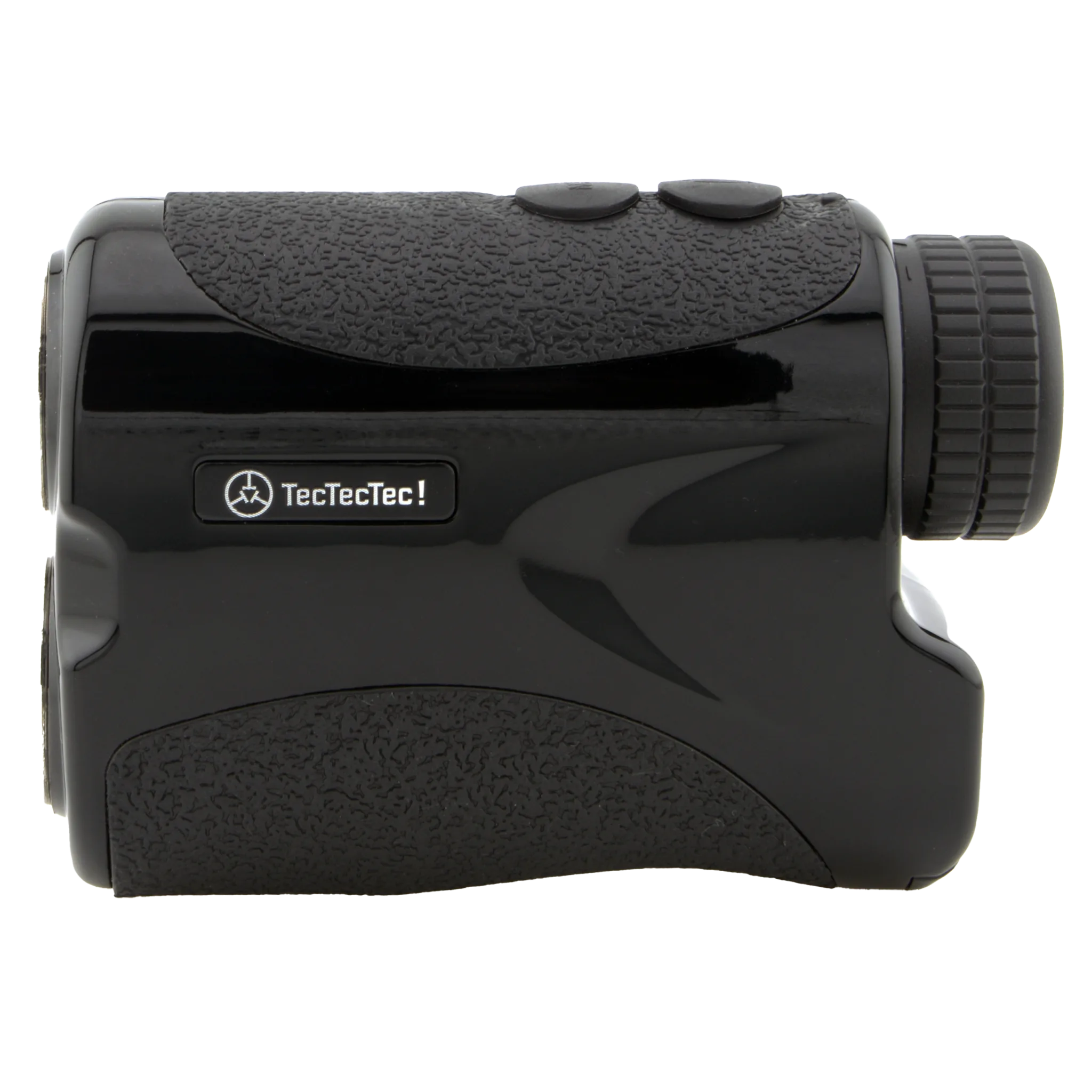 Recommended
TecTecTec VPRO500
Budget slope laser with 104 reviews — 800 yard range, Combined Slope & Pin Seeker, diopter adjustment at under £90
£89
Review- Recommended
Mileseey PF260 Tour
Entry Mileseey laser with external slope switch, rechargeable battery with CR2 backup — currently £109.99
£109
Review 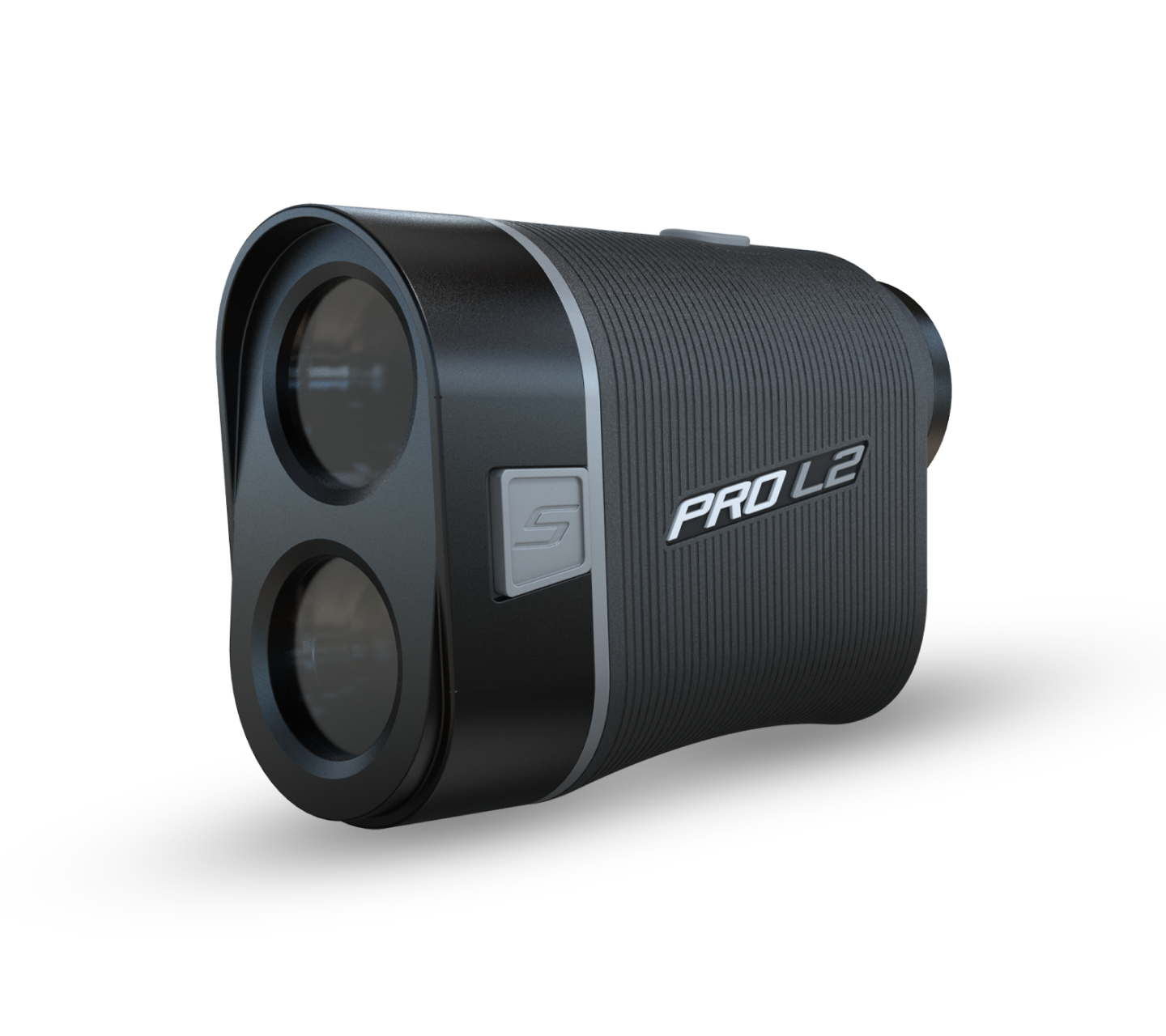 Recommended
Shot Scope Pro L2
The most reviewed Shot Scope laser — reliable slope rangefinder at an honest price
£149
Review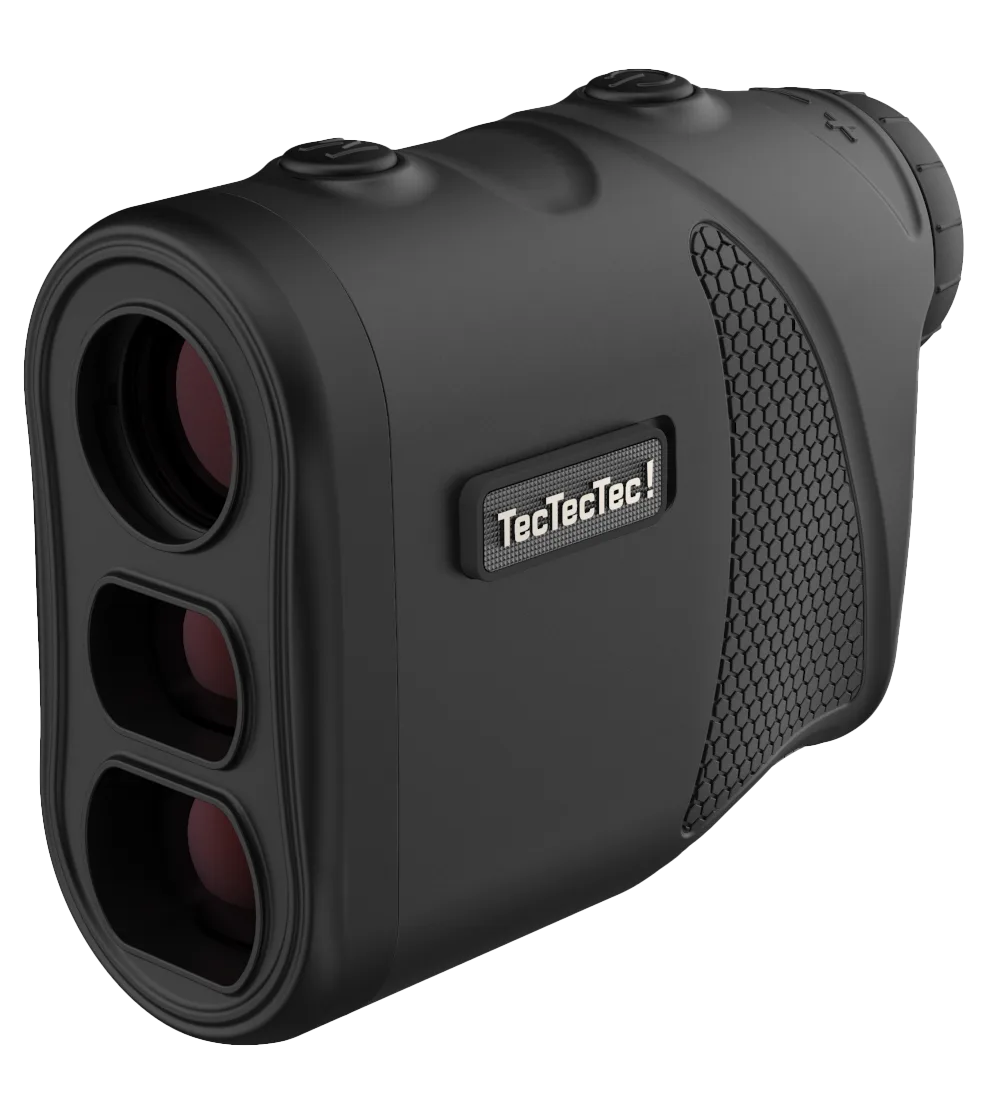 Recommended
TecTecTec KLYR
World's most versatile rangefinder — pocket-sized with magnet, belt clip, ball marker and case all included
£159
Review- Recommended
Voice Caddie Laser Fit
The lightest rangefinder on the UK market at 113g — Ball to Pin mode, rechargeable, 4.9 stars from verified buyers
£169
Review - Recommended
Shot Scope Pro L5
OLED display laser with slope, x7 magnification and 1,300 yard range at an outstanding price
£169
Review 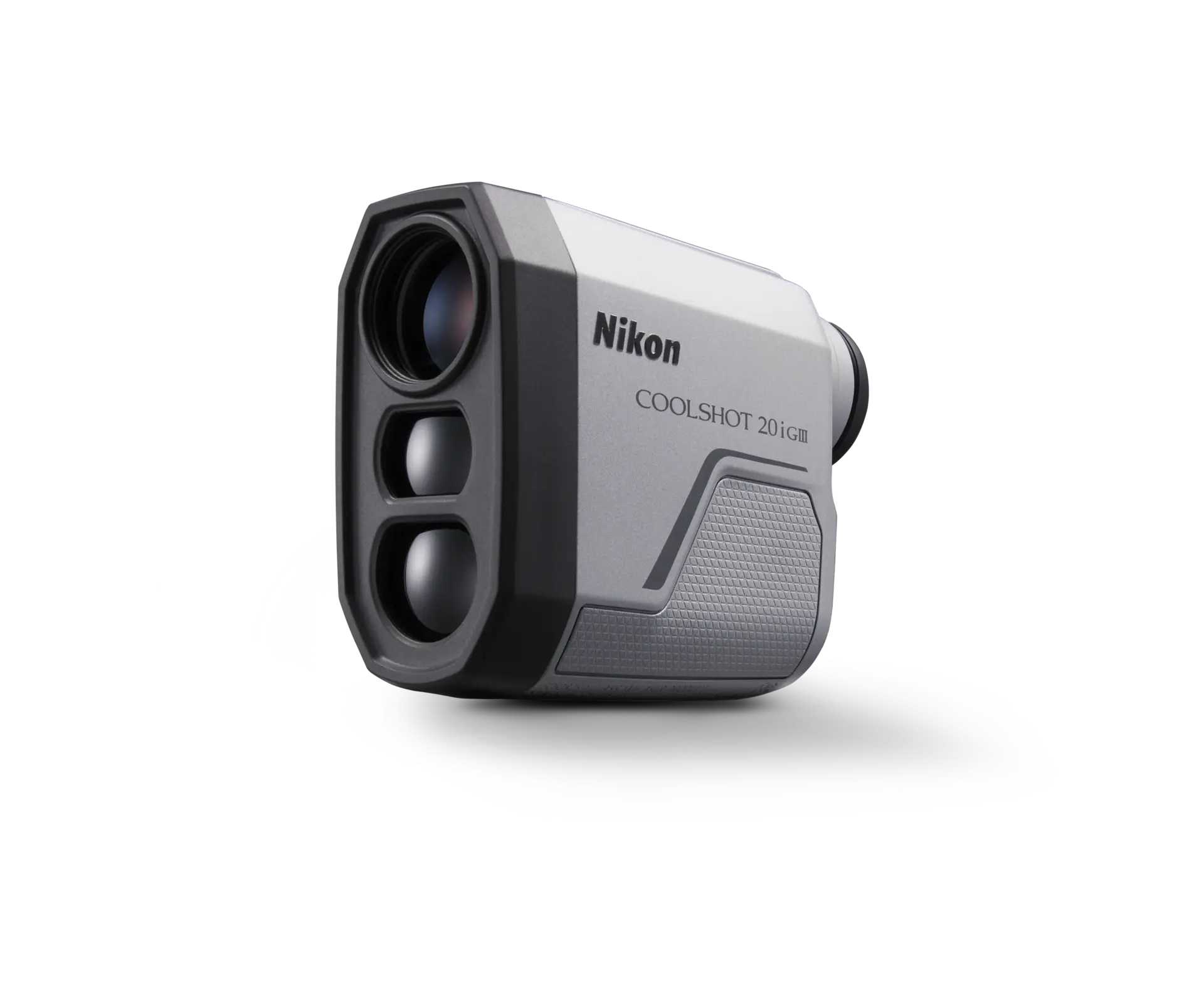 Recommended
Nikon Coolshot 20i GIII
The lightest slope laser in the Nikon range — 130g, ID slope technology, First Target Priority
£179
Review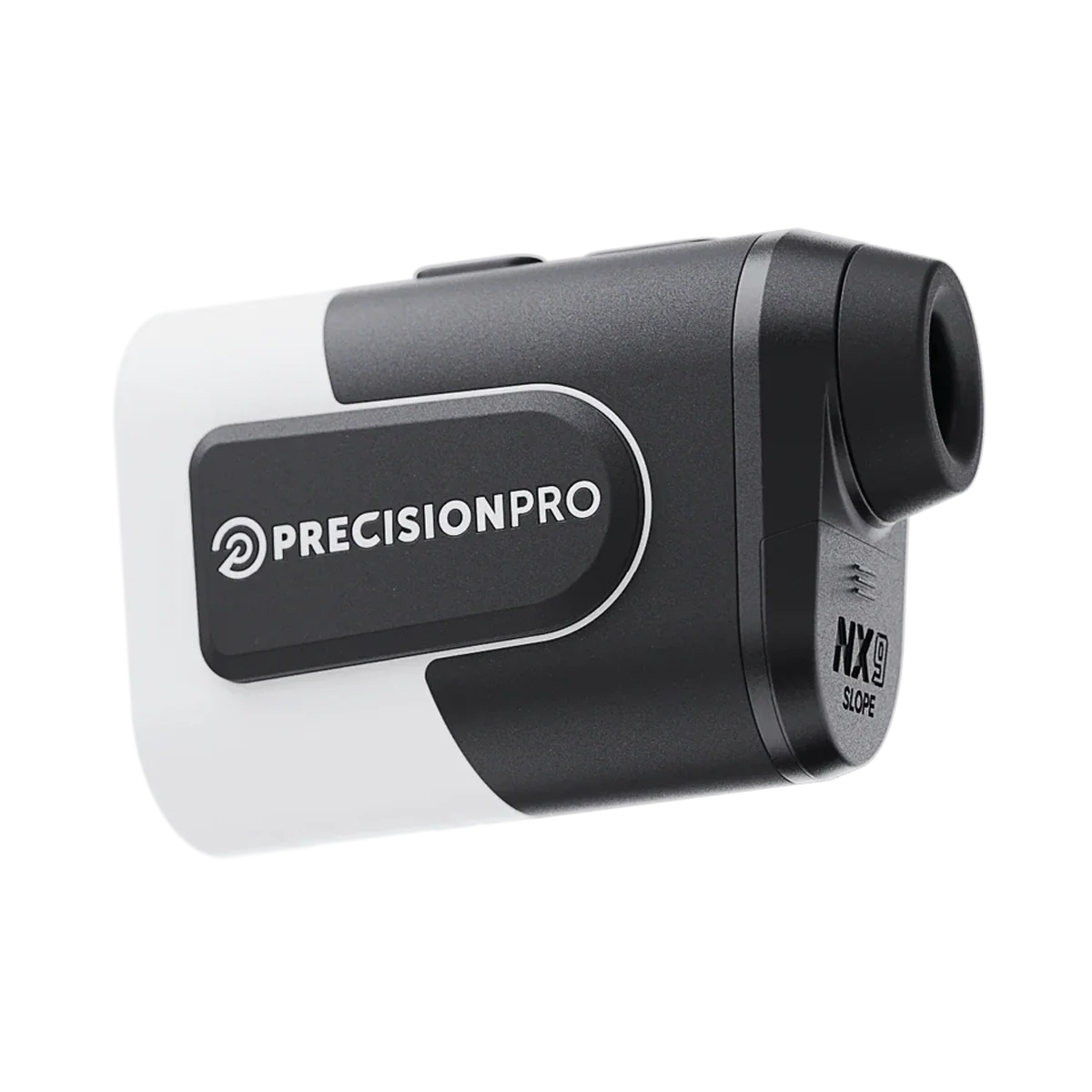 Recommended
Precision Pro NX9
Clean, uncluttered laser with slope and pulse vibration lock — lifetime battery replacement guarantee
£199
Review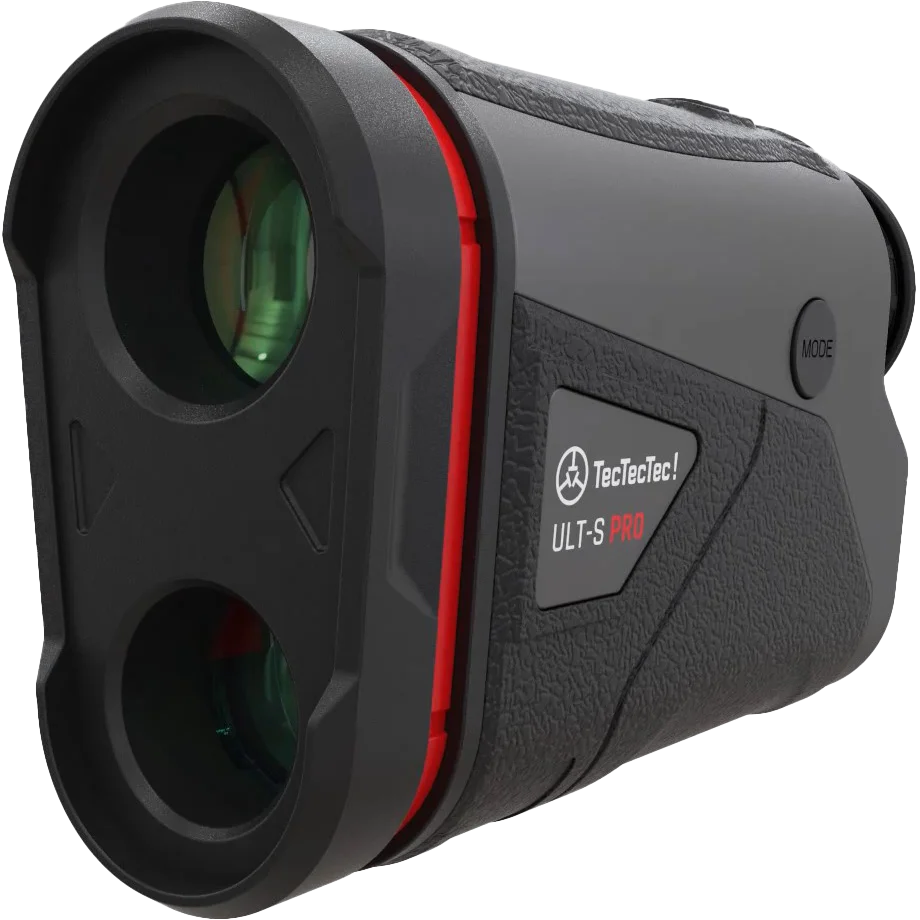 Recommended
TecTecTec ULT-S Pro
Optical image stabilisation, TOLED red display and Fog Mode — Forbes Best Golf Rangefinder For Shaky Hands
£199
Review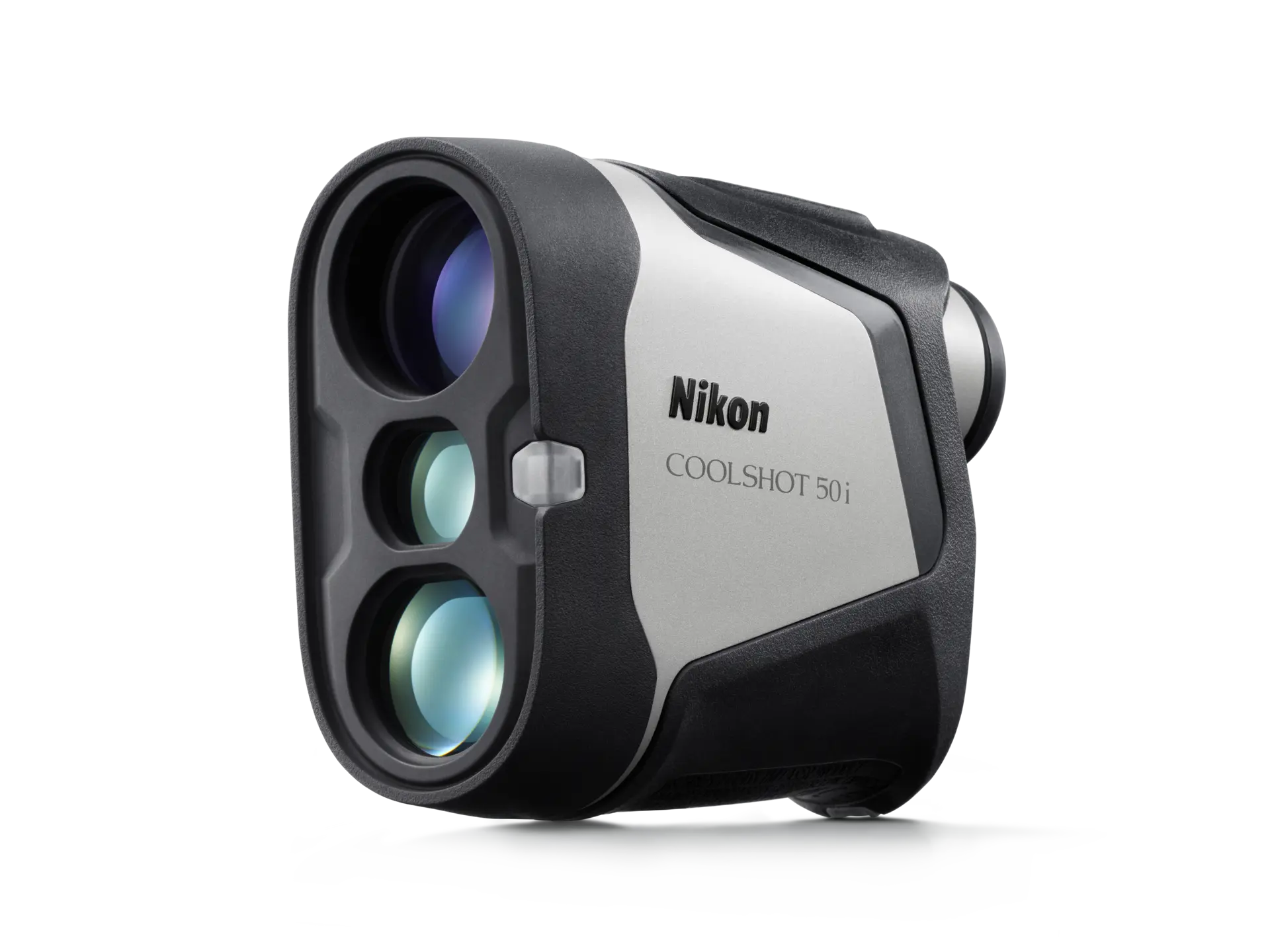 Recommended
Nikon Coolshot 50i
Nikon's first rangefinder with built-in magnet — slope, DUAL LOCKED ON QUAKE at a reduced price
£199
Review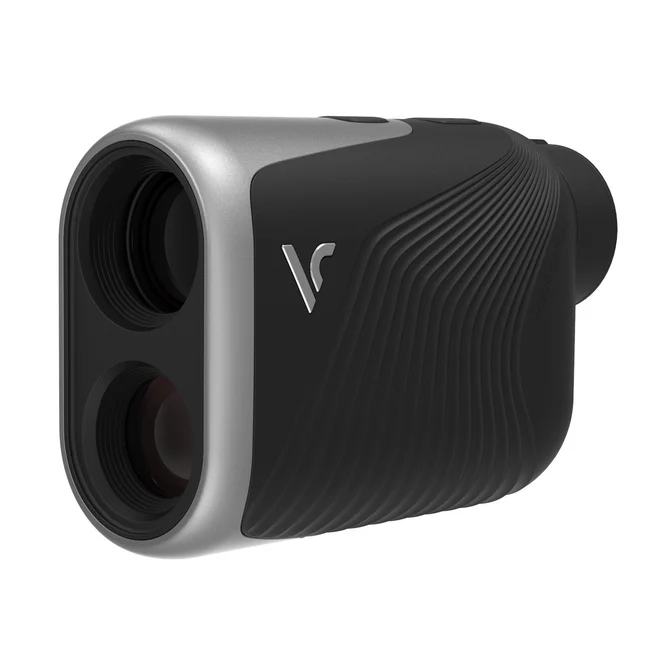 Recommended
Voice Caddie L6
Red OLED display, Speed Detecting Booster and Pin Tracer with visual and vibration confirmation
£199
Review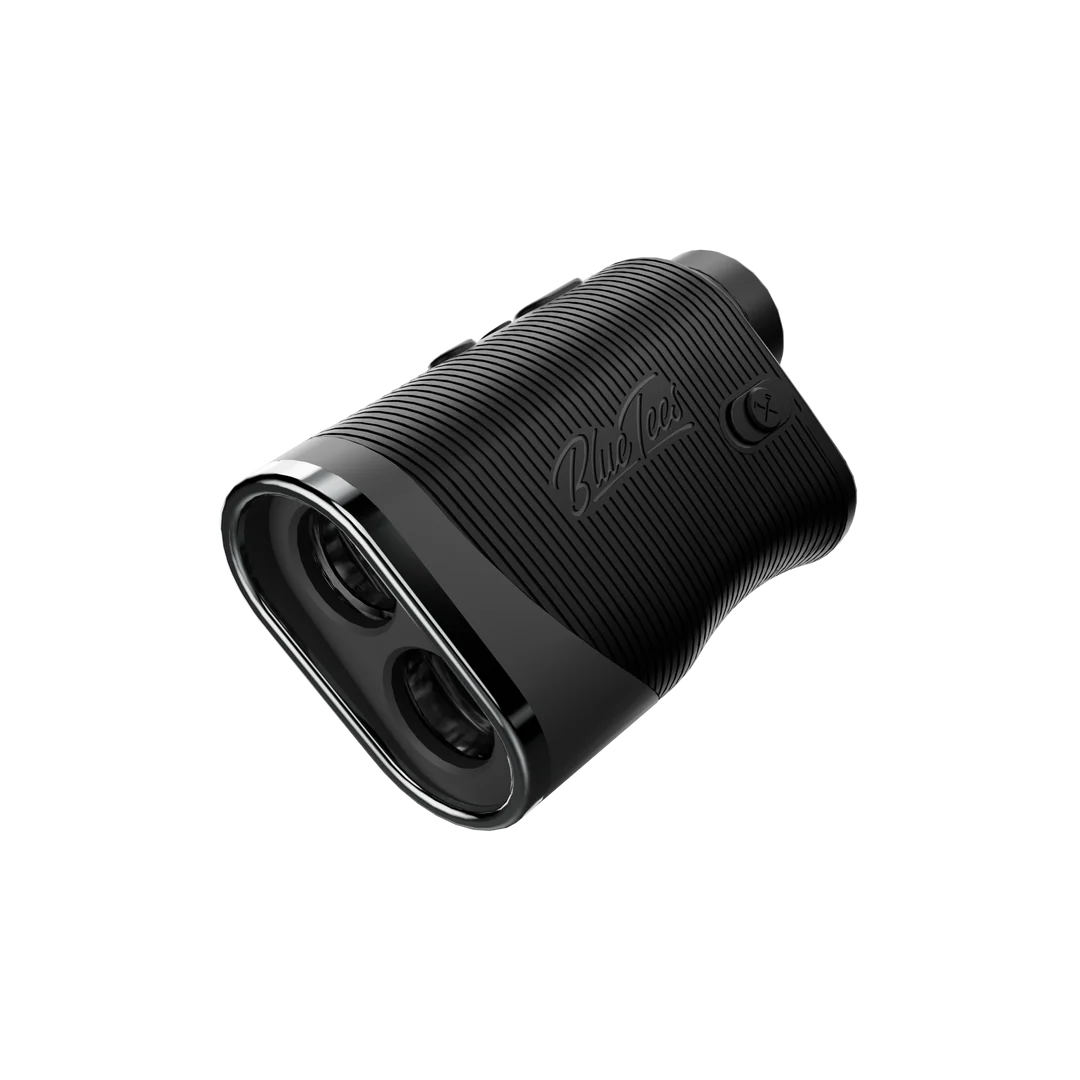 Recommended
Blue Tees Series 3 Max E
Blue Tees bestselling rangefinder — red/black display, slope switch, active tracking and magnetic strip at £199
£199
Review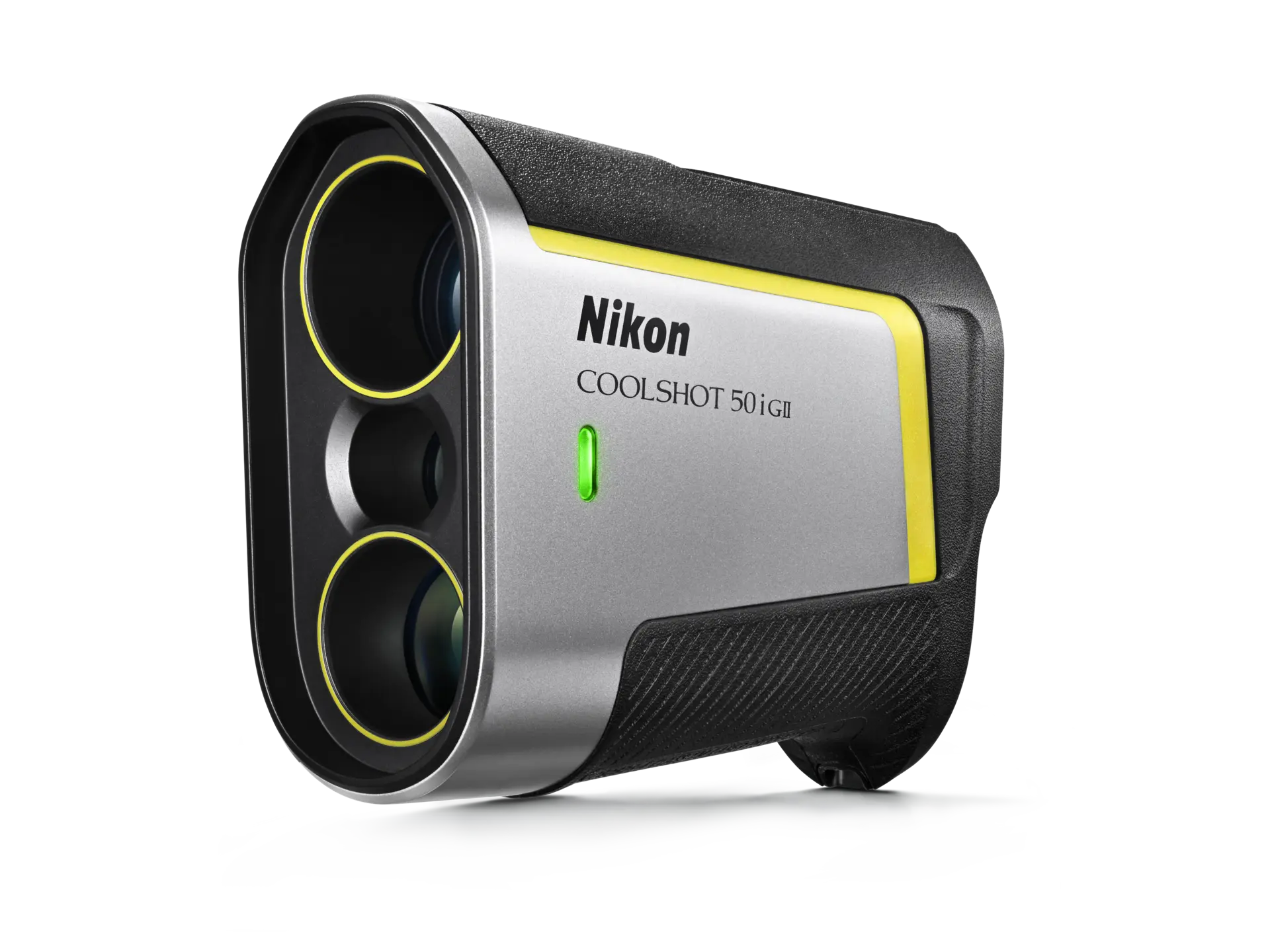 Recommended
Nikon Coolshot 50i GII
Upgraded 50i with stronger magnetic mount, First Target Priority and dioptre adjustment
£249
Review- Recommended
Precision Pro NX10
External slope switch for instant tournament compliance — premium ABS build with magnetic grip
£249
Review 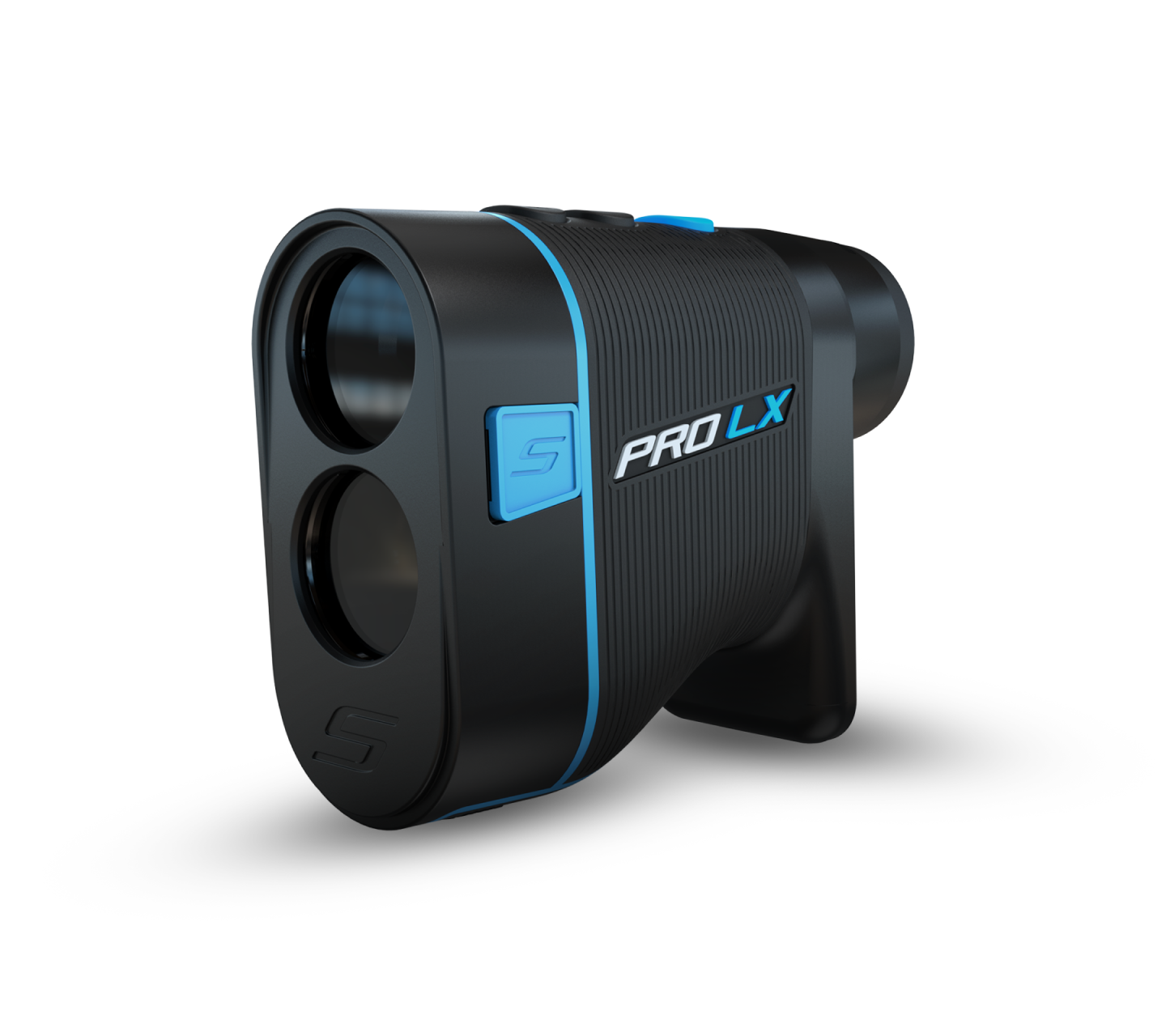 Recommended
Shot Scope Pro LX
Compact laser with x7 magnification, dual optics and free GPS app — without the shot tracking bundle
£249
Review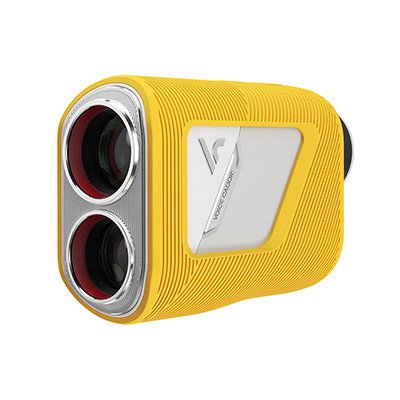 Recommended
Voice Caddie TL1
Dual-colour OLED, 0.1-second response, V-Algorithm slope with GPS integration — 216 reviews at 4.8 stars
£279
Review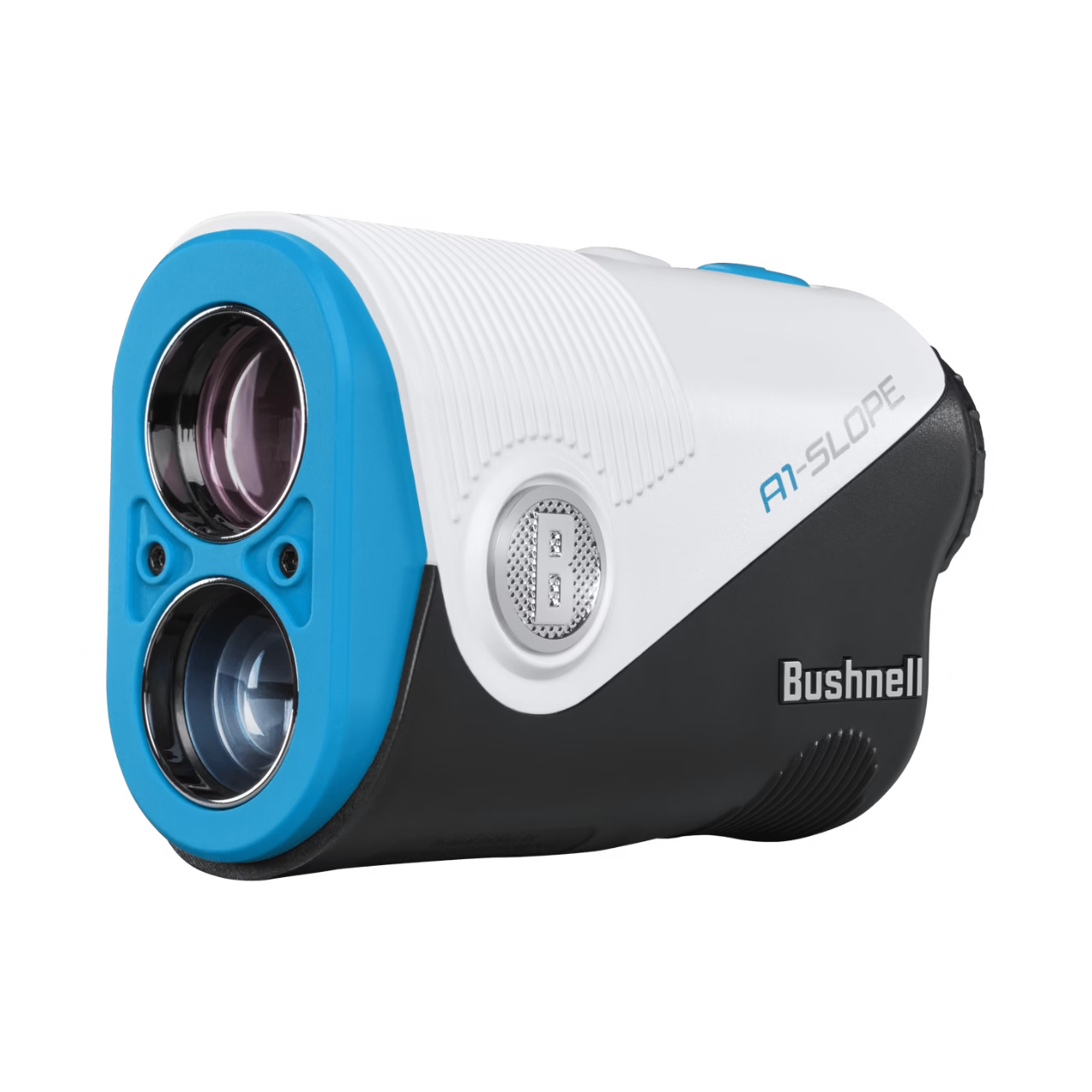 Recommended
Bushnell A1 Slope
The smallest Bushnell laser ever — ultra-compact with slope and rechargeable battery
£279
Review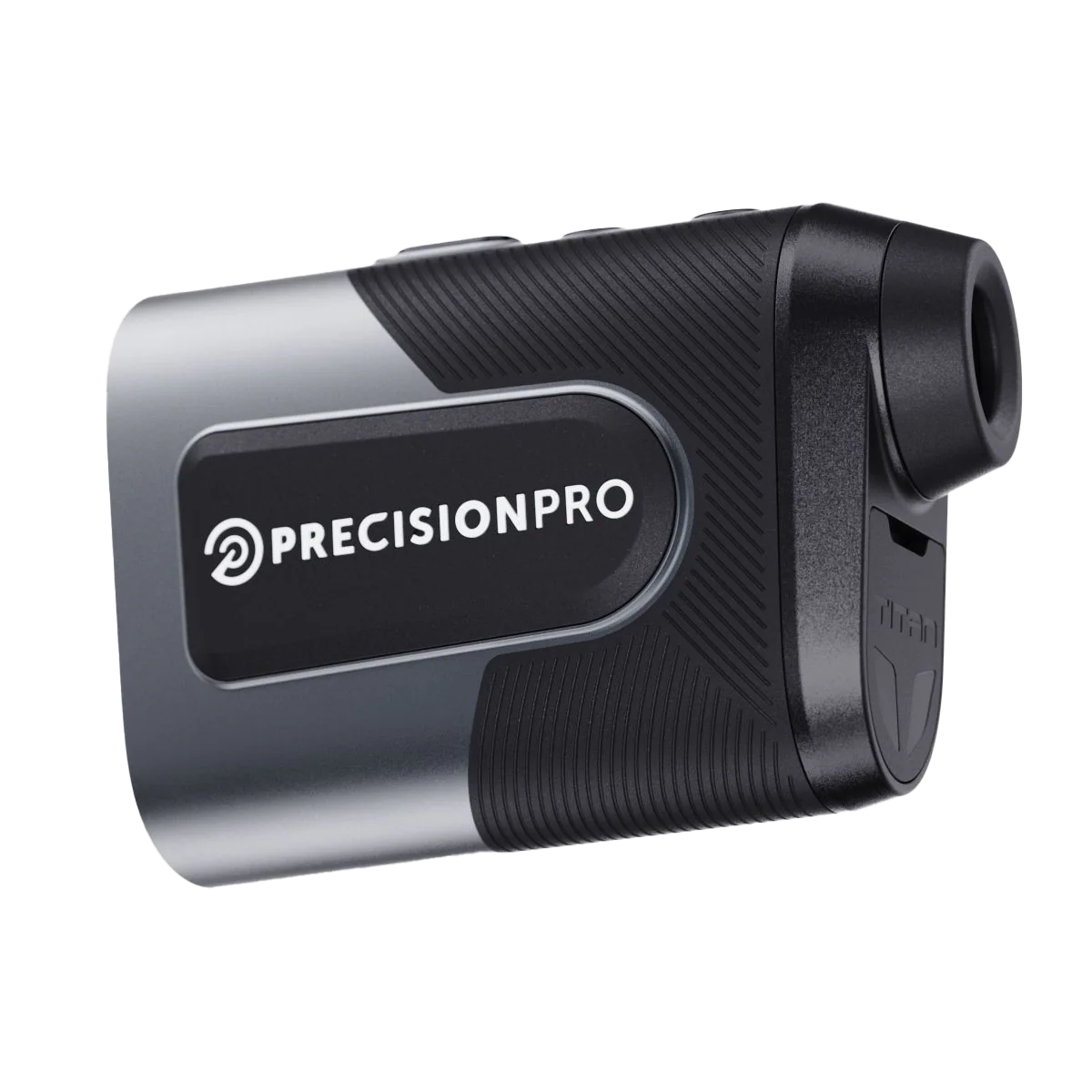 Recommended
Precision Pro Titan Slope
Aluminium shell, IP67 fully waterproof, USB-C rechargeable — the most durable rangefinder under £300
£299
Review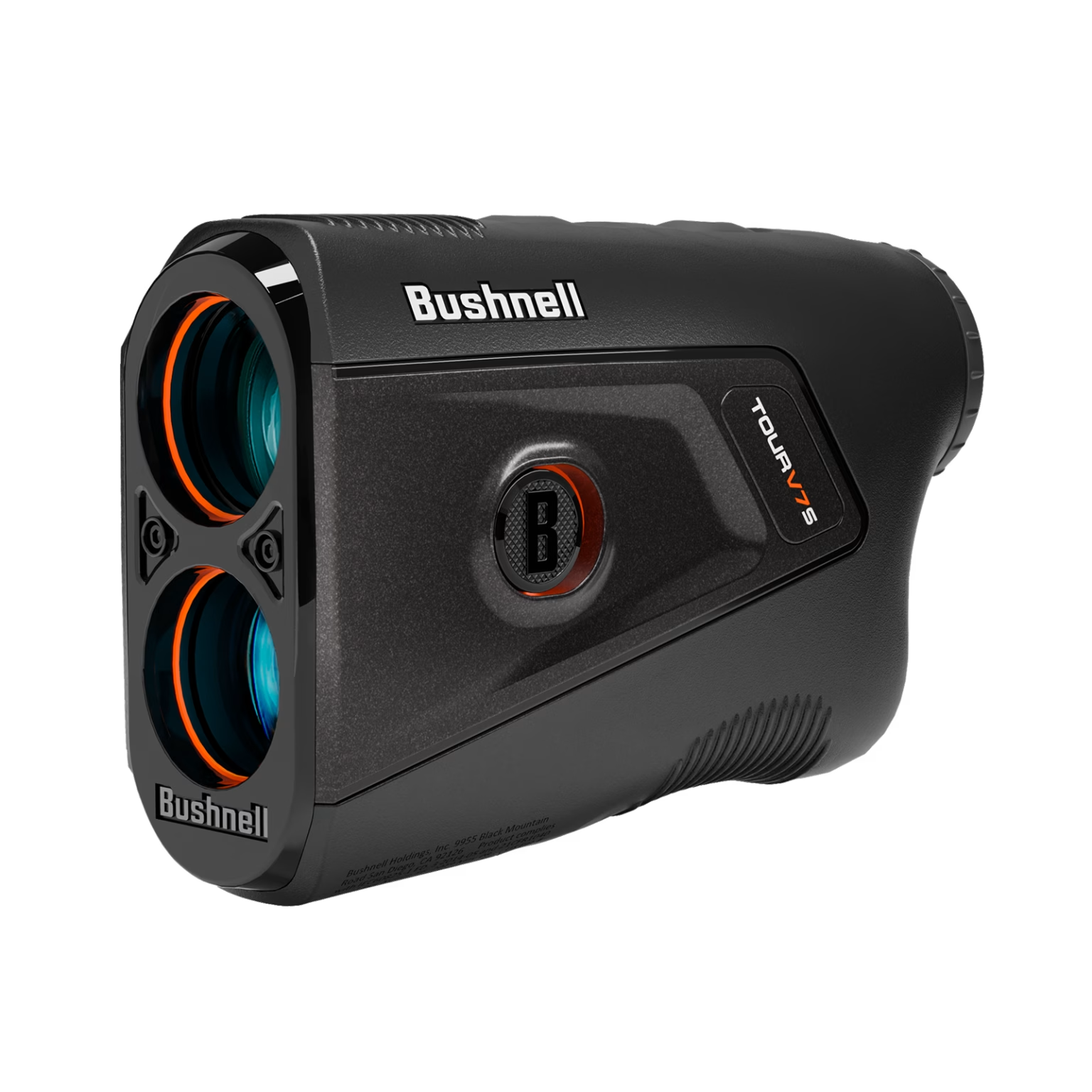 Recommended
Bushnell Tour V7 Shift
Updated Tour V6 with improved optics
£329
Review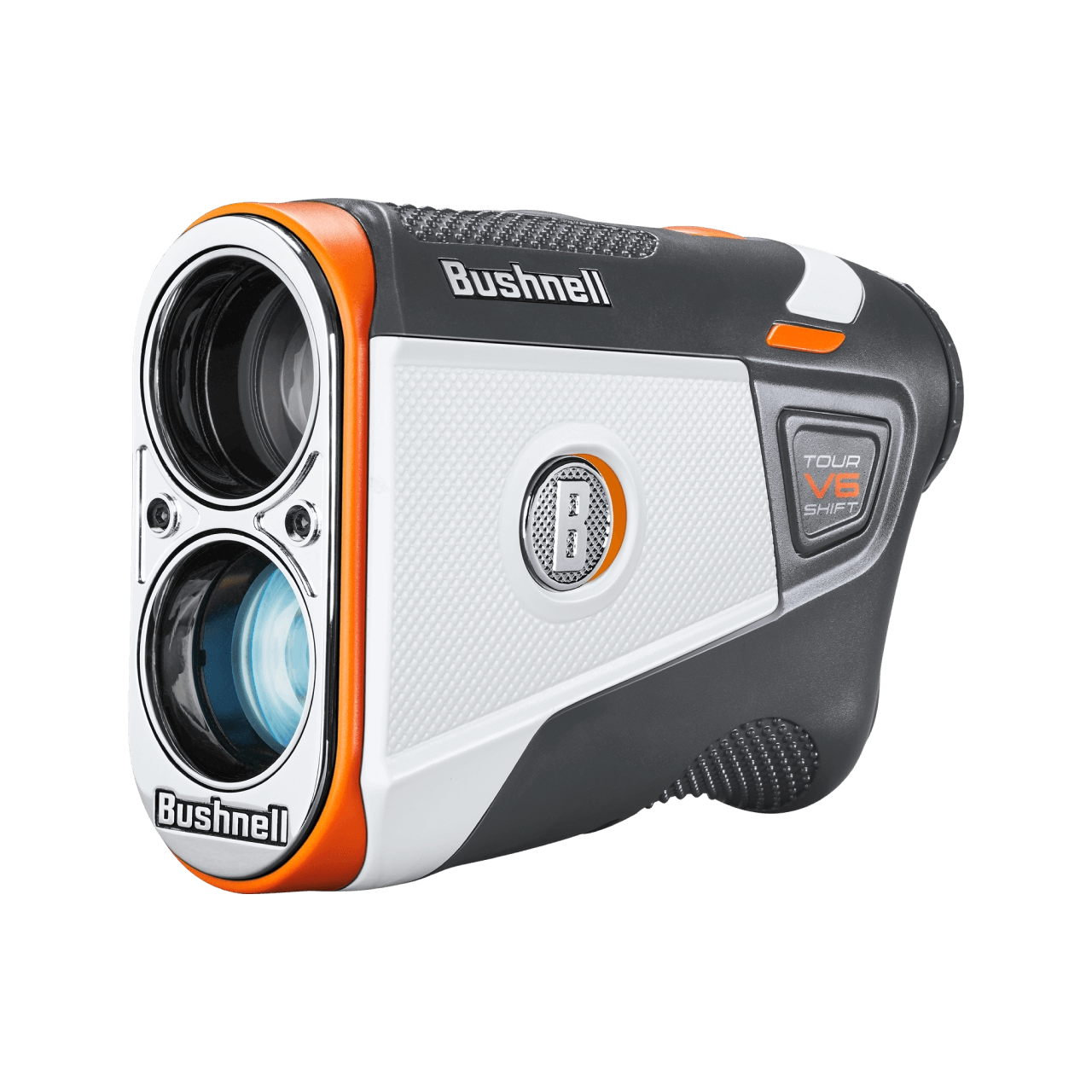 Recommended
Bushnell Tour V6 Shift
Slope switch added to the Tour V6 benchmark
£349
Review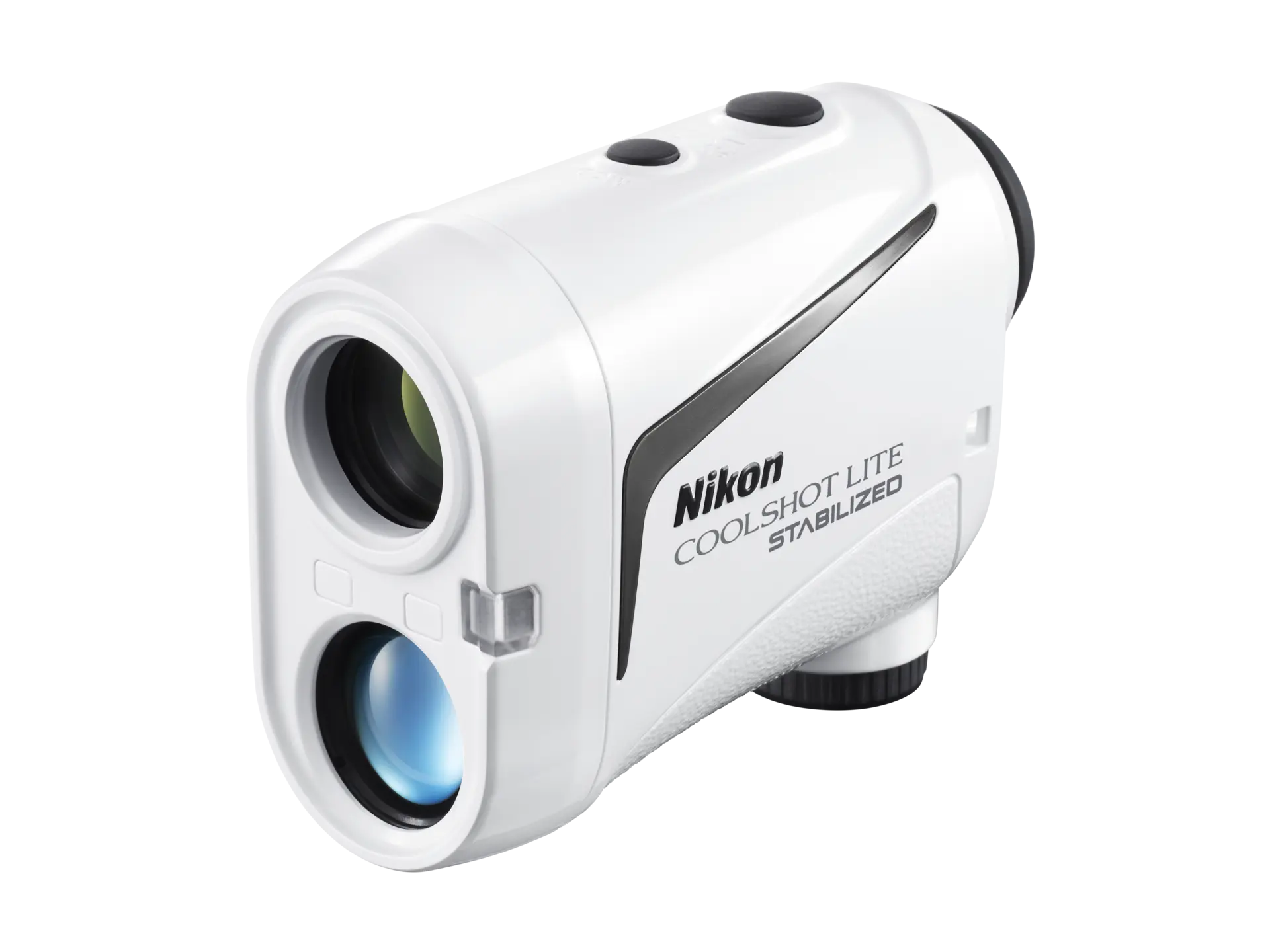 Recommended
Nikon Coolshot Lite Stabilized
Entry point to Nikon stabilisation — HYPER READ and slope at a more accessible price
£349
Review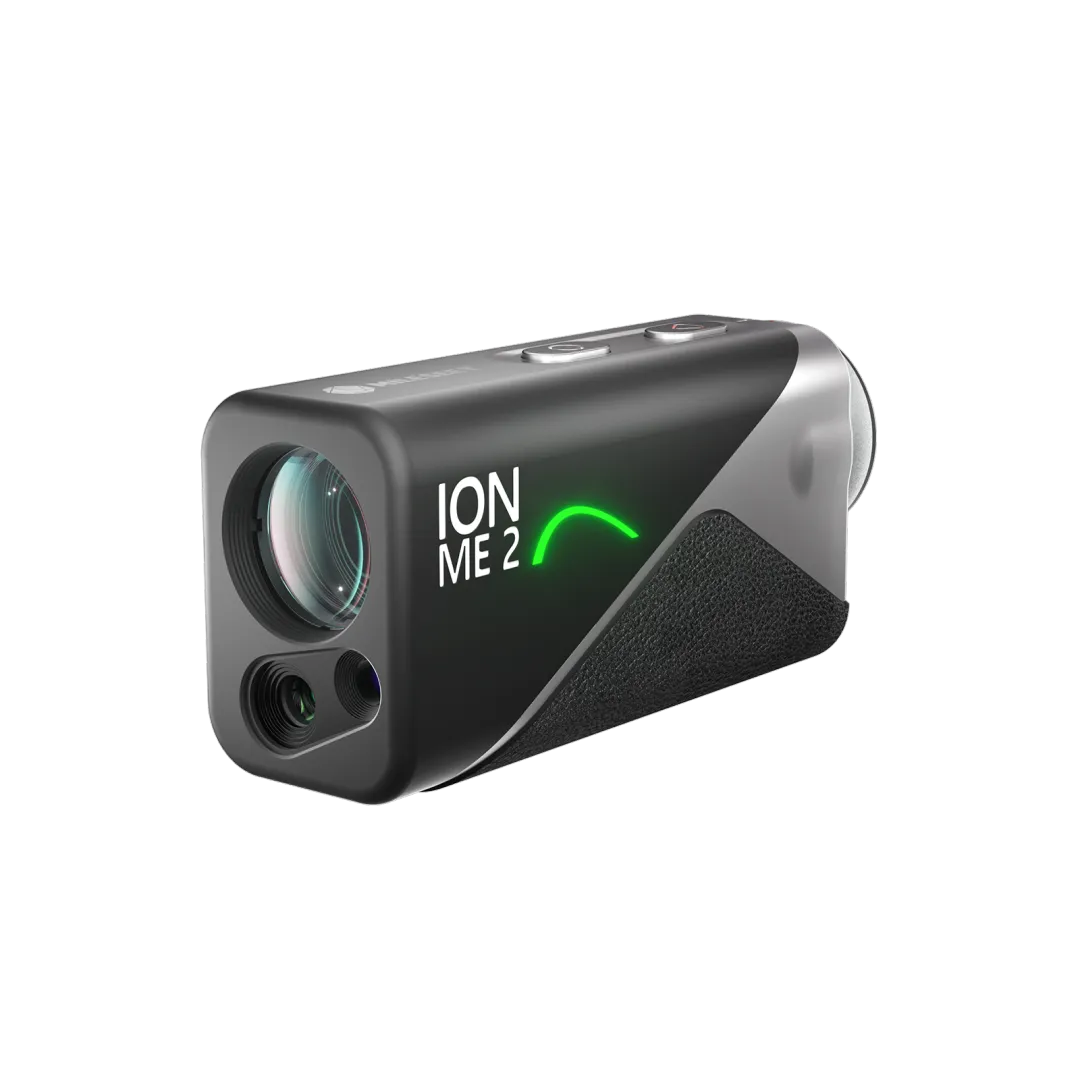 Recommended
Mileseey IONME2
Premium compact laser with PinPoint Green, red/green OLED, Rain & Fog Mode and 1.5m drop resistance — mini in size, serious in performance
£399
Review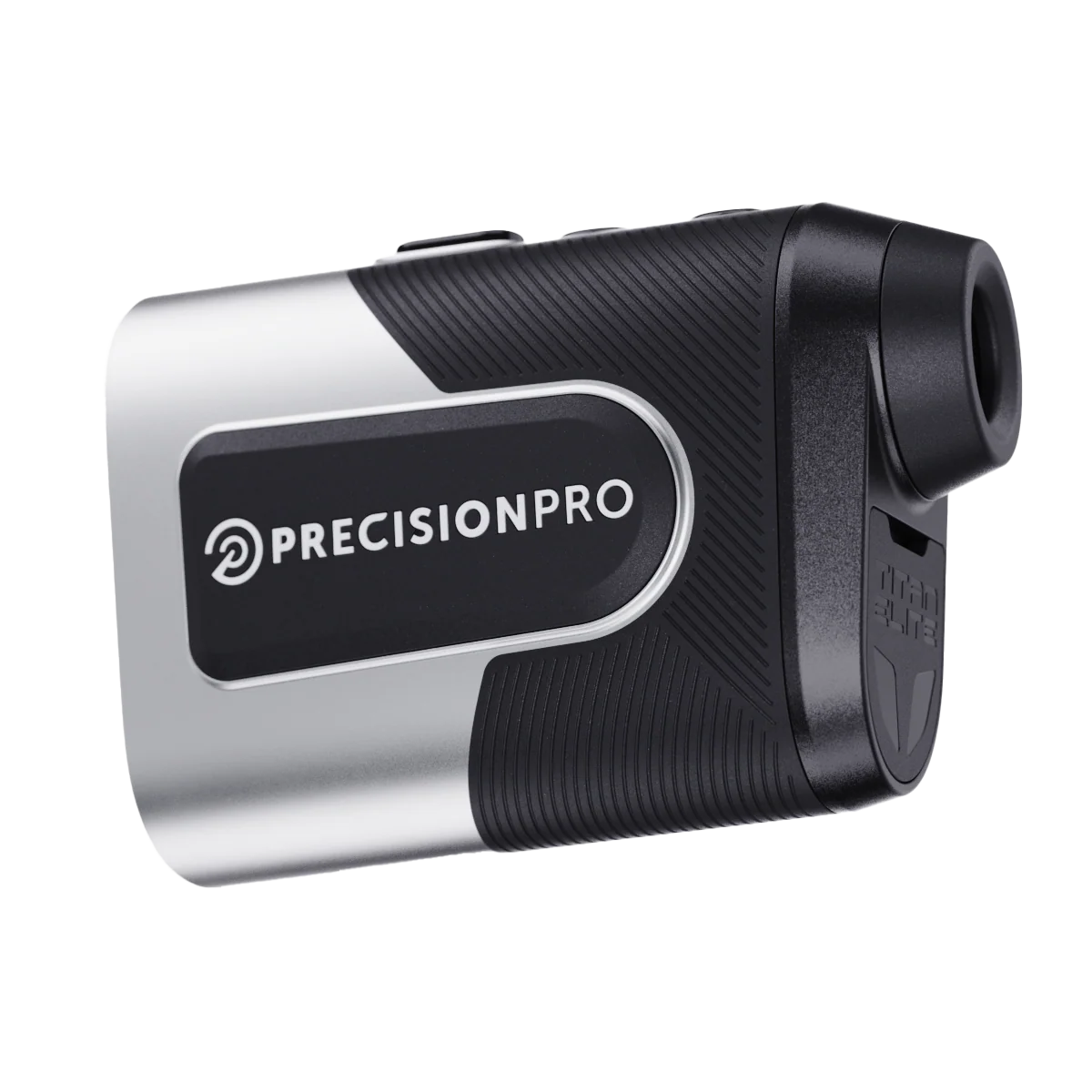 Recommended
Precision Pro Titan Elite
Aluminium shell, IP67, GPS front/centre/back in display and find-my-rangefinder — Golf Monthly Editor's Choice
£399
Review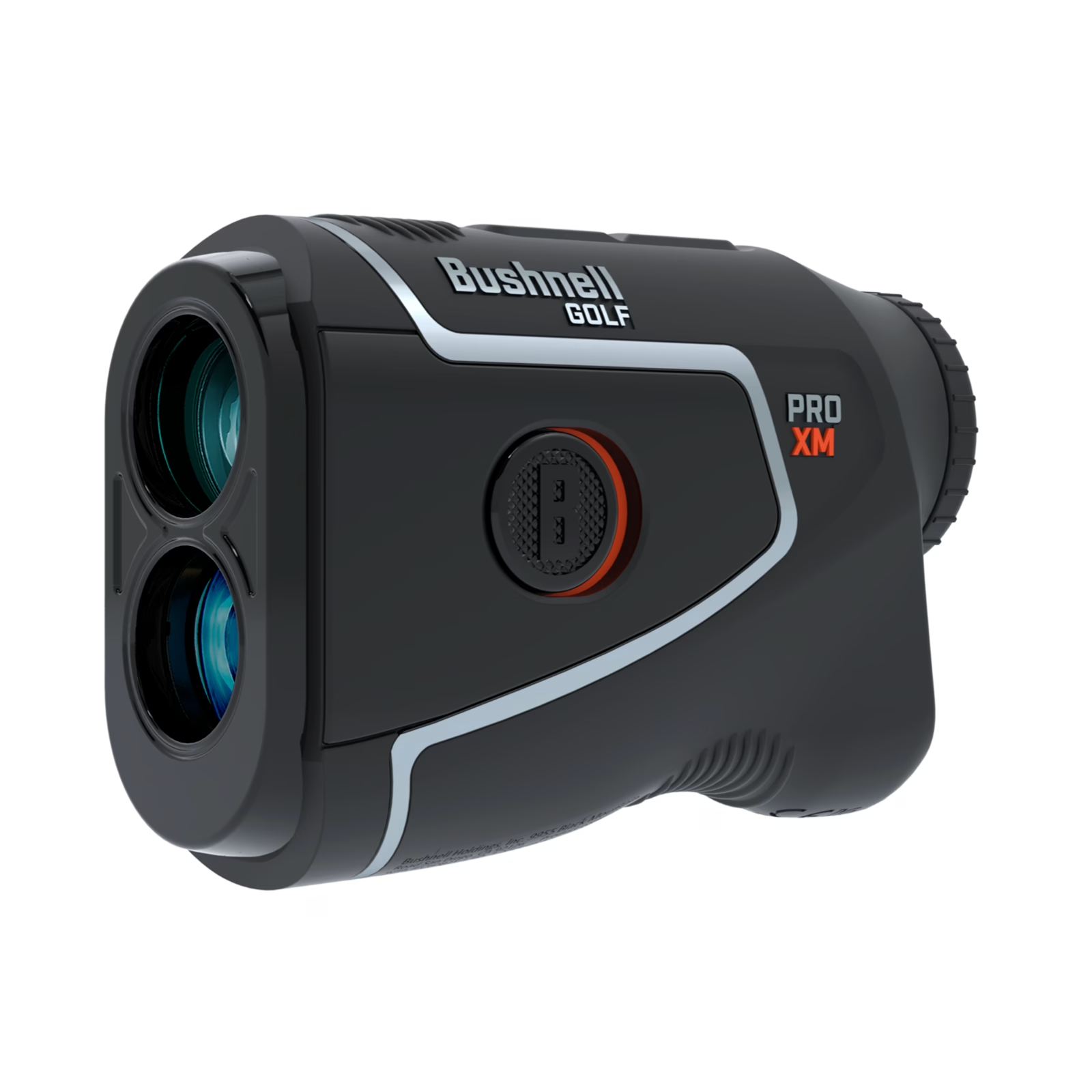 Recommended
Bushnell Pro XM
Compact OLED laser with rechargeable battery and LINK technology
£469
Review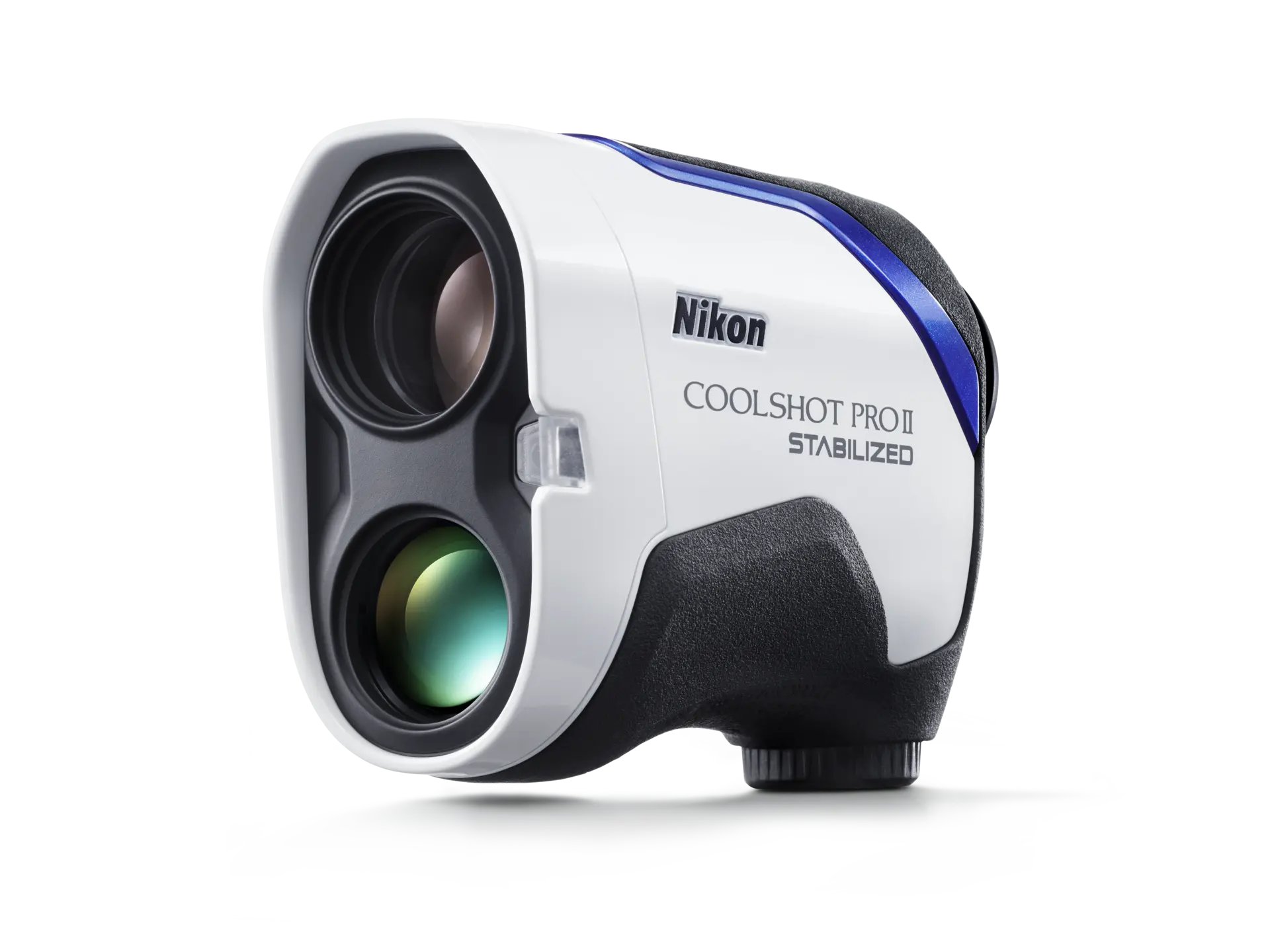 Recommended
Nikon Coolshot Pro II Stabilized
Nikon optical stabilisation with OLED display and HYPER READ — the predecessor to the Pro III at full RRP
£489
Review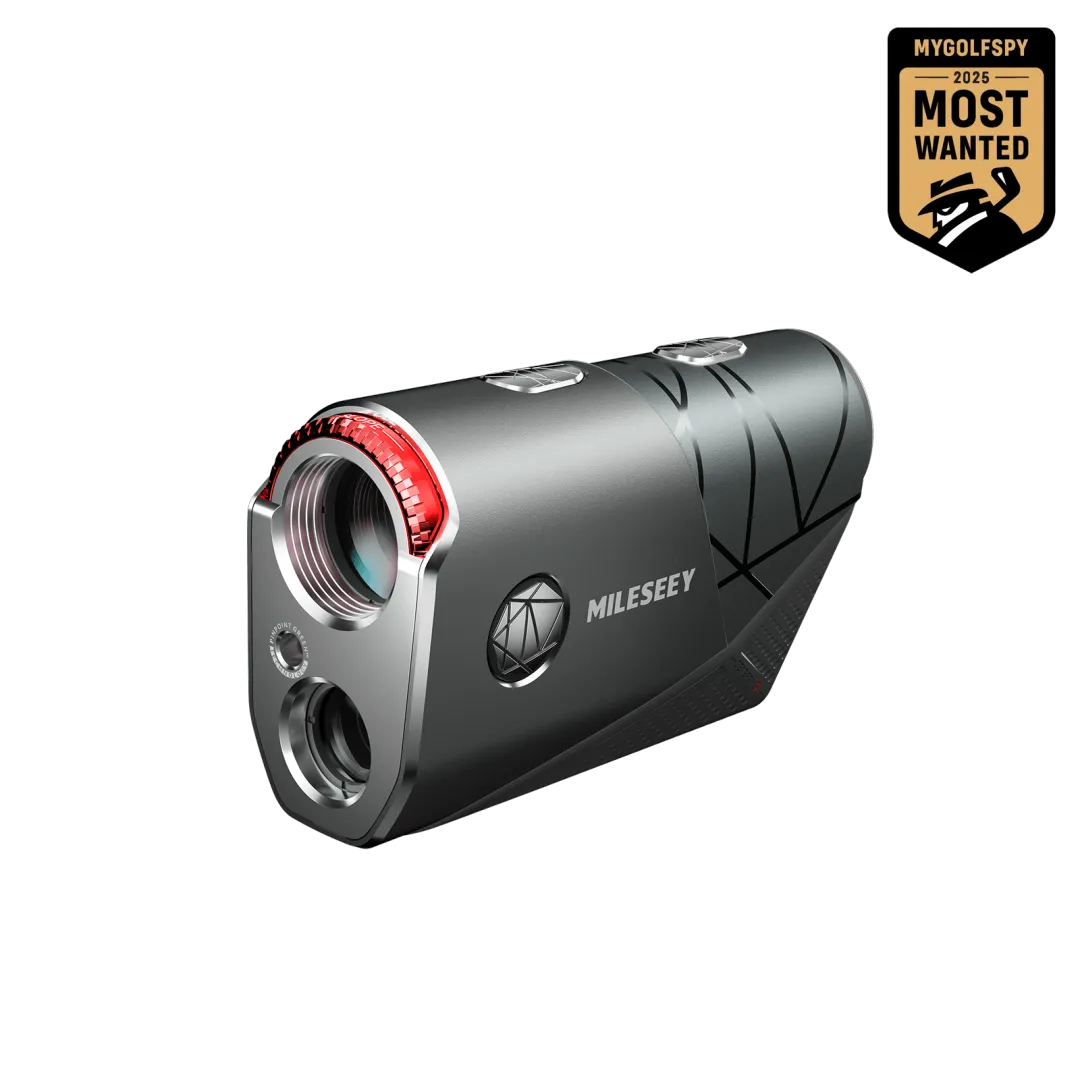 Recommended
Mileseey GenePro S1
AI-powered rangefinder with PinPoint Green centimetre-level accuracy, SmartSlope and Rain & Fog Mode — 7.5x magnification at £799.99
£799
Review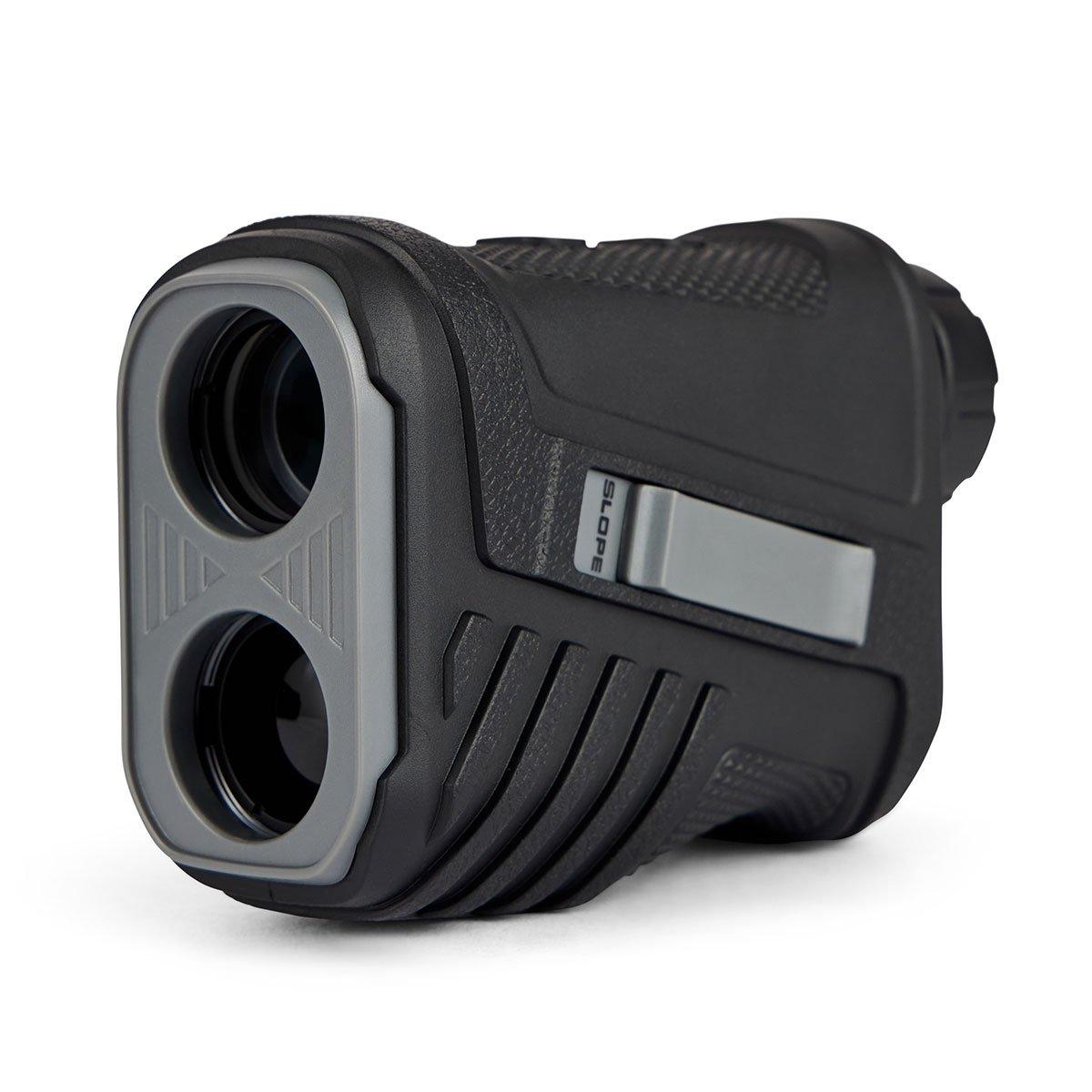 Also Available
Fazer XR5
Entry-level budget laser — basic accurate distances at the lowest price point in the guide
£89
Review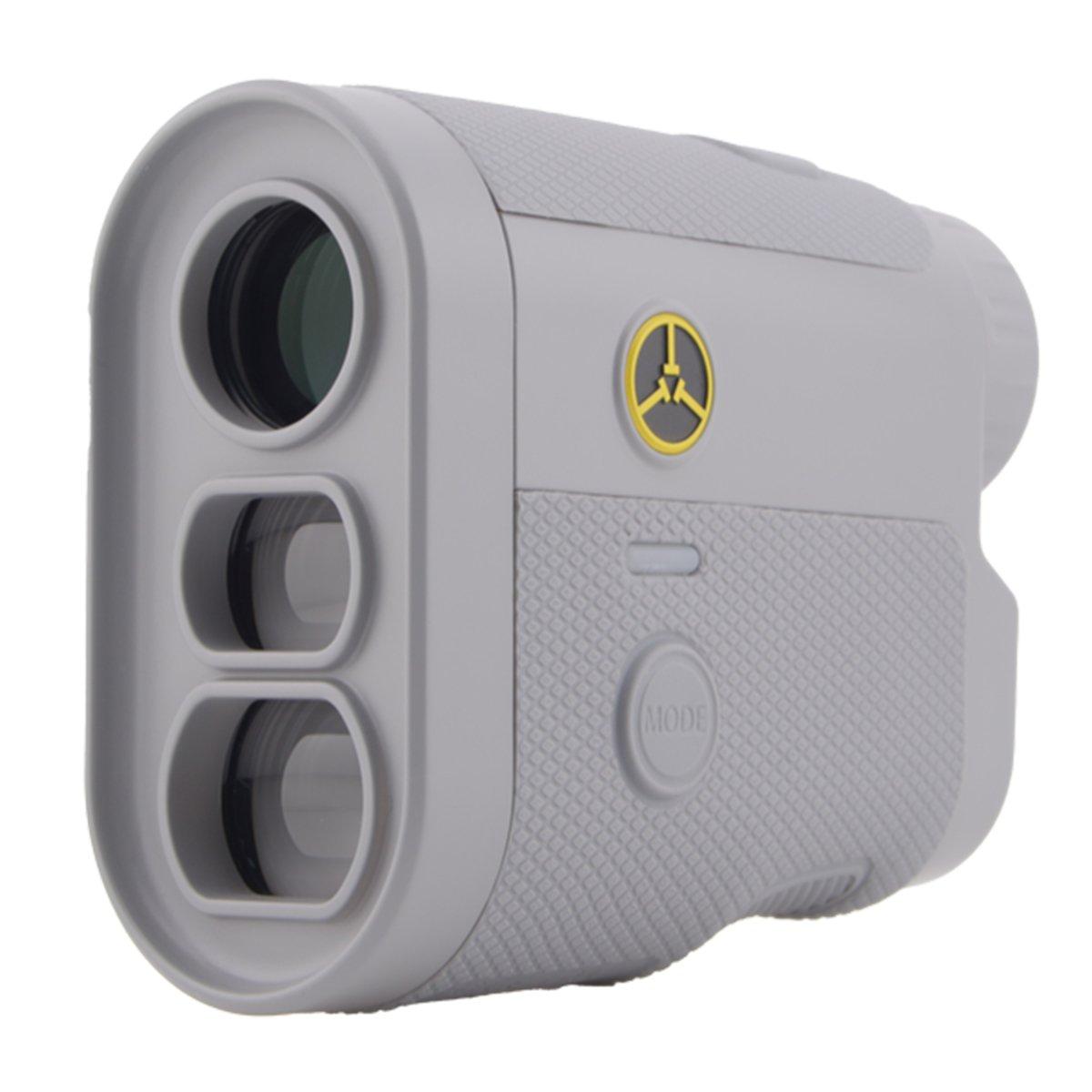 Also Available
TecTecTec PINM8 Pro
Compact slope laser with red LCD, cart magnet and 8,000-10,000 measurement battery life — available at American Golf
£139
Review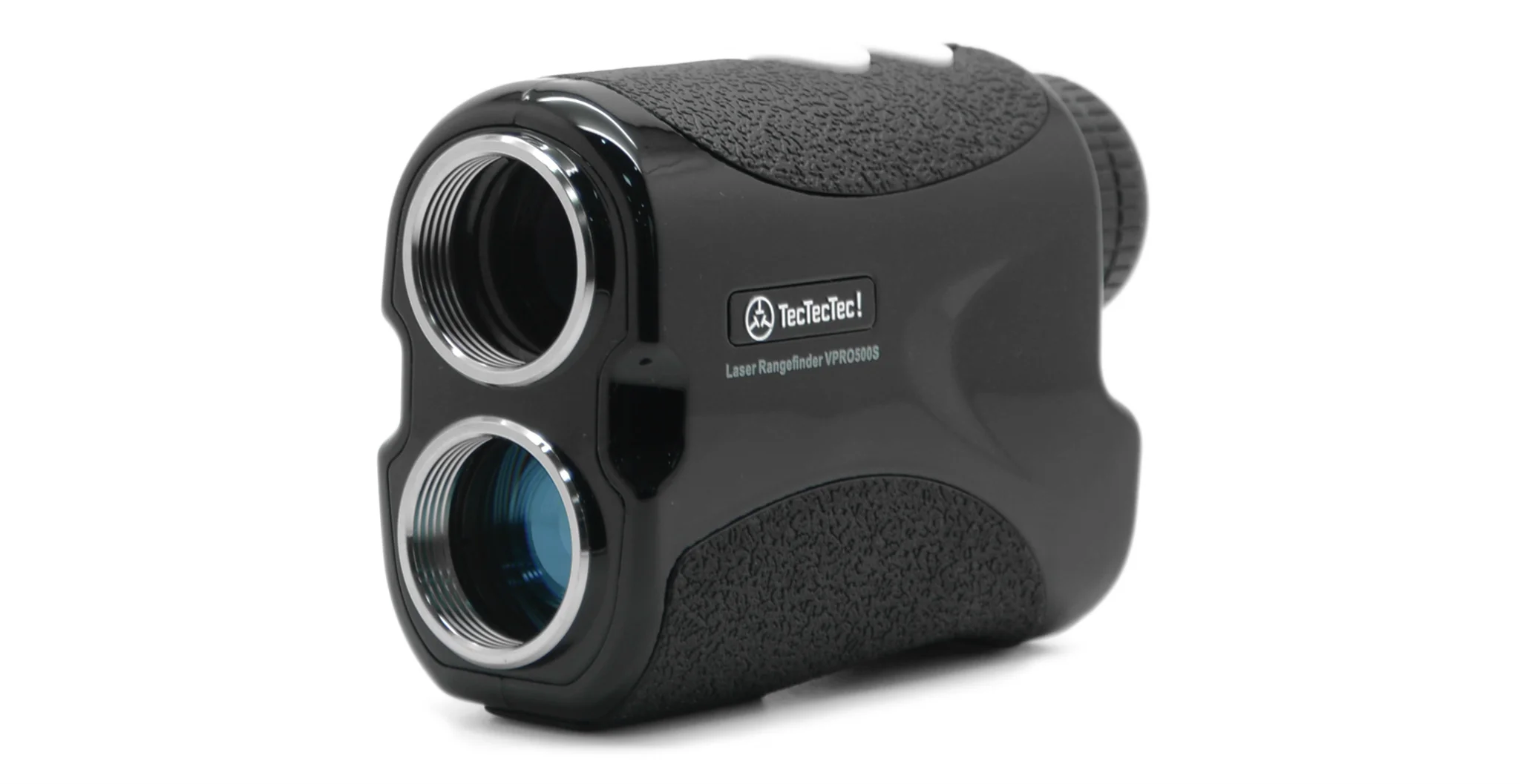 Also Available
TecTecTec VPRO500S
Entry TecTecTec slope laser — 71 reviews, First Target Priority, diopter adjustment and slope at an entry price
£149
Review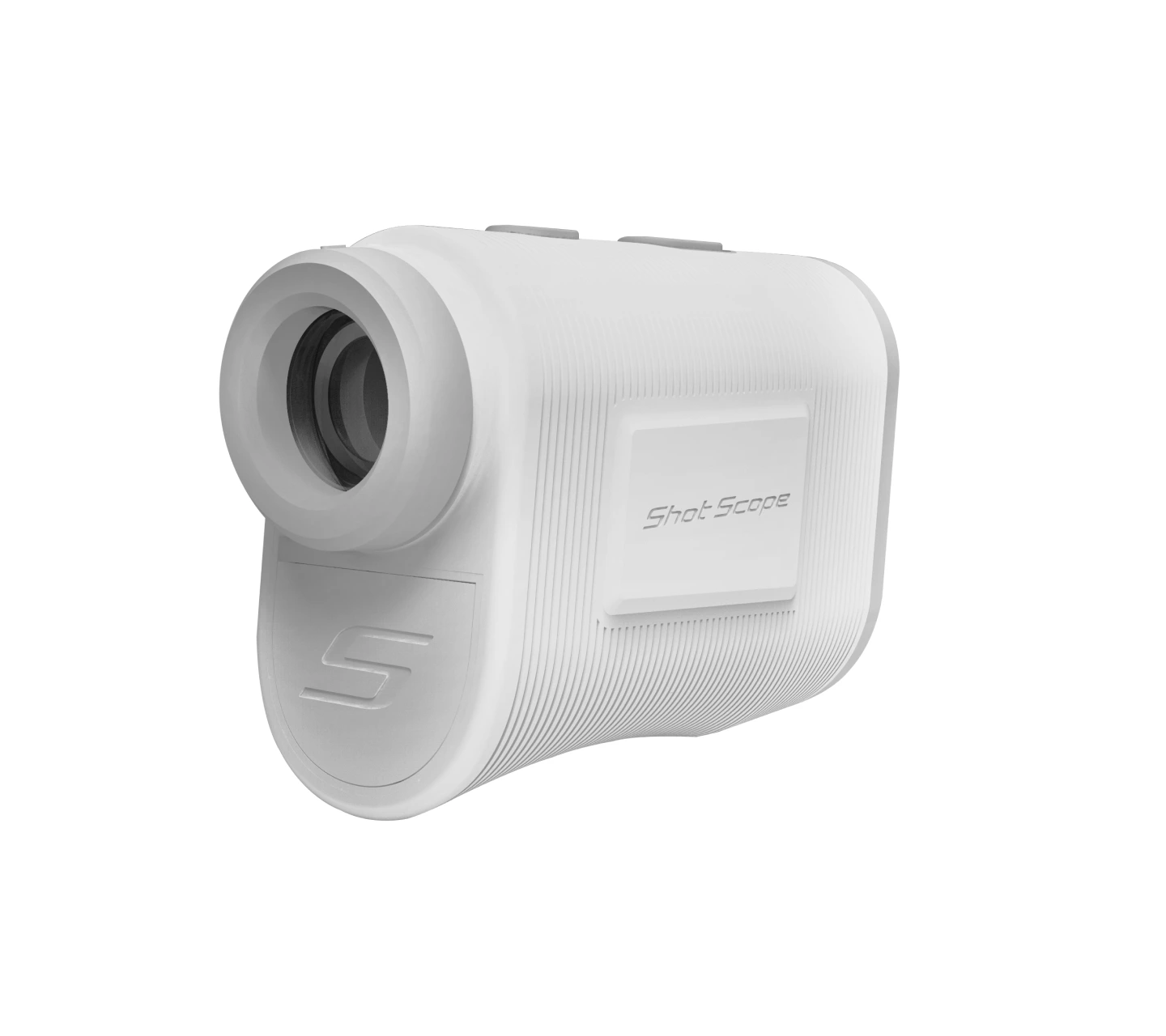 Also Available
Shot Scope Pro X
Customisable laser rangefinder — 10 designs including England, Scotland, Ireland and Wales editions
£149
Review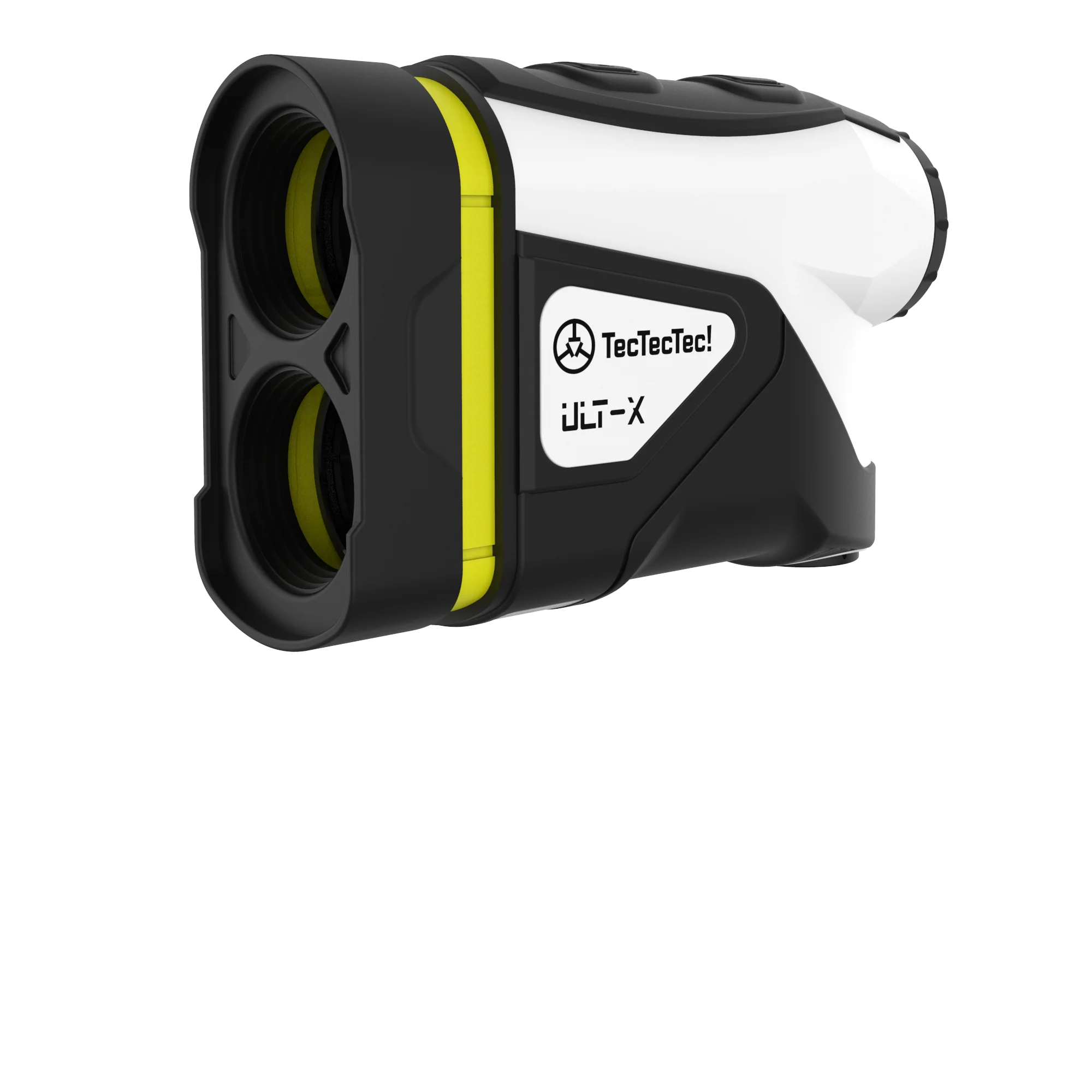 Also Available
TecTecTec ULT-X
Most precise TecTecTec laser — 0.3 yard accuracy to 300 yards, pull-out faceplate slope, designed in France
£199
Review
Sub-category · Hybrid
Hybrid (Laser + GPS)
UK price range
£299 – £599
For golfers who want laser precision to the flag and GPS course overview in a single device.
- Top Pick
Garmin Approach Z82
The most technically accomplished rangefinder on the UK market — laser precision with full GPS course overlay in the viewfinder
£499
Review 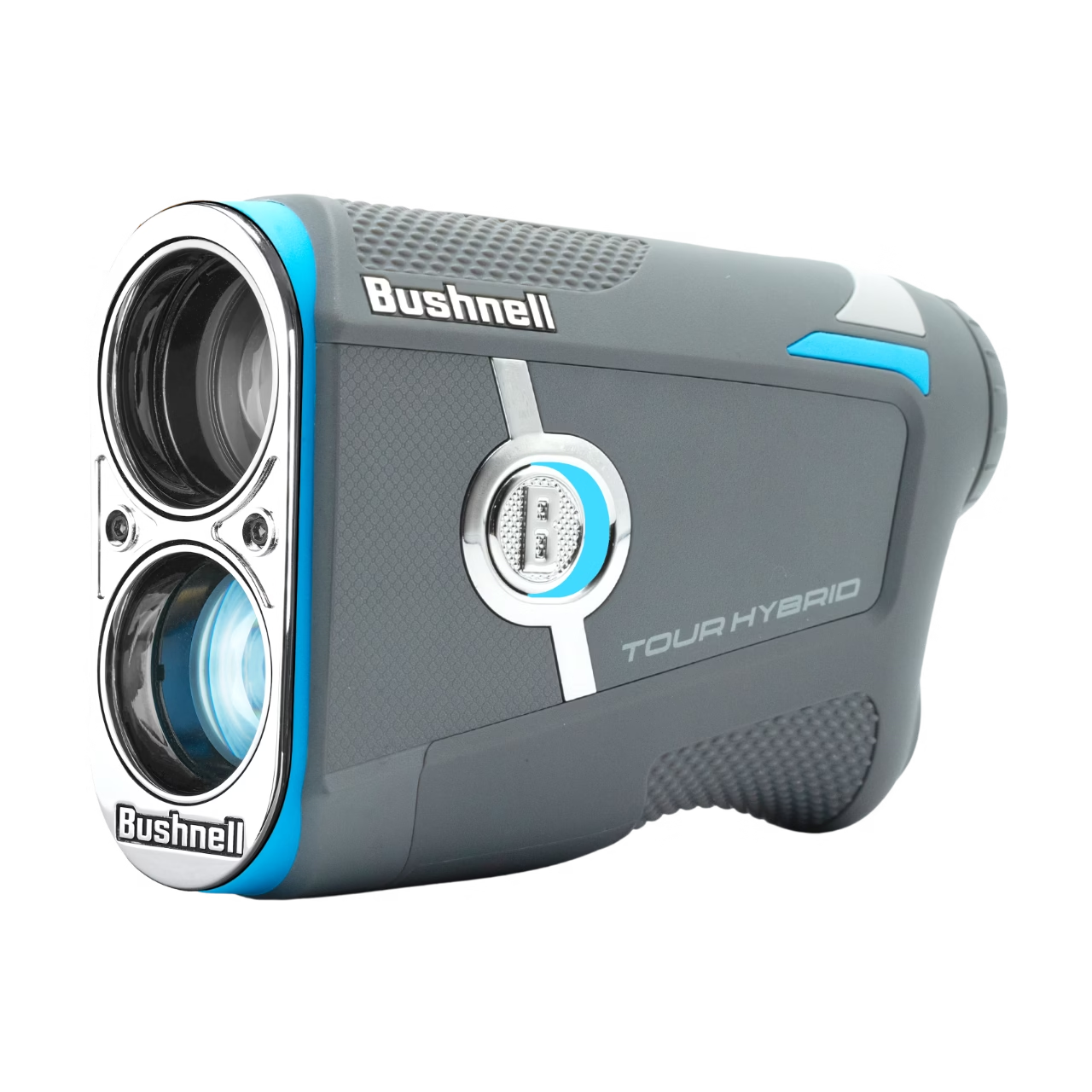 Top Pick
Bushnell Tour Hybrid
Slope-compensated laser and GPS distances in one device — no phone needed
£499
Review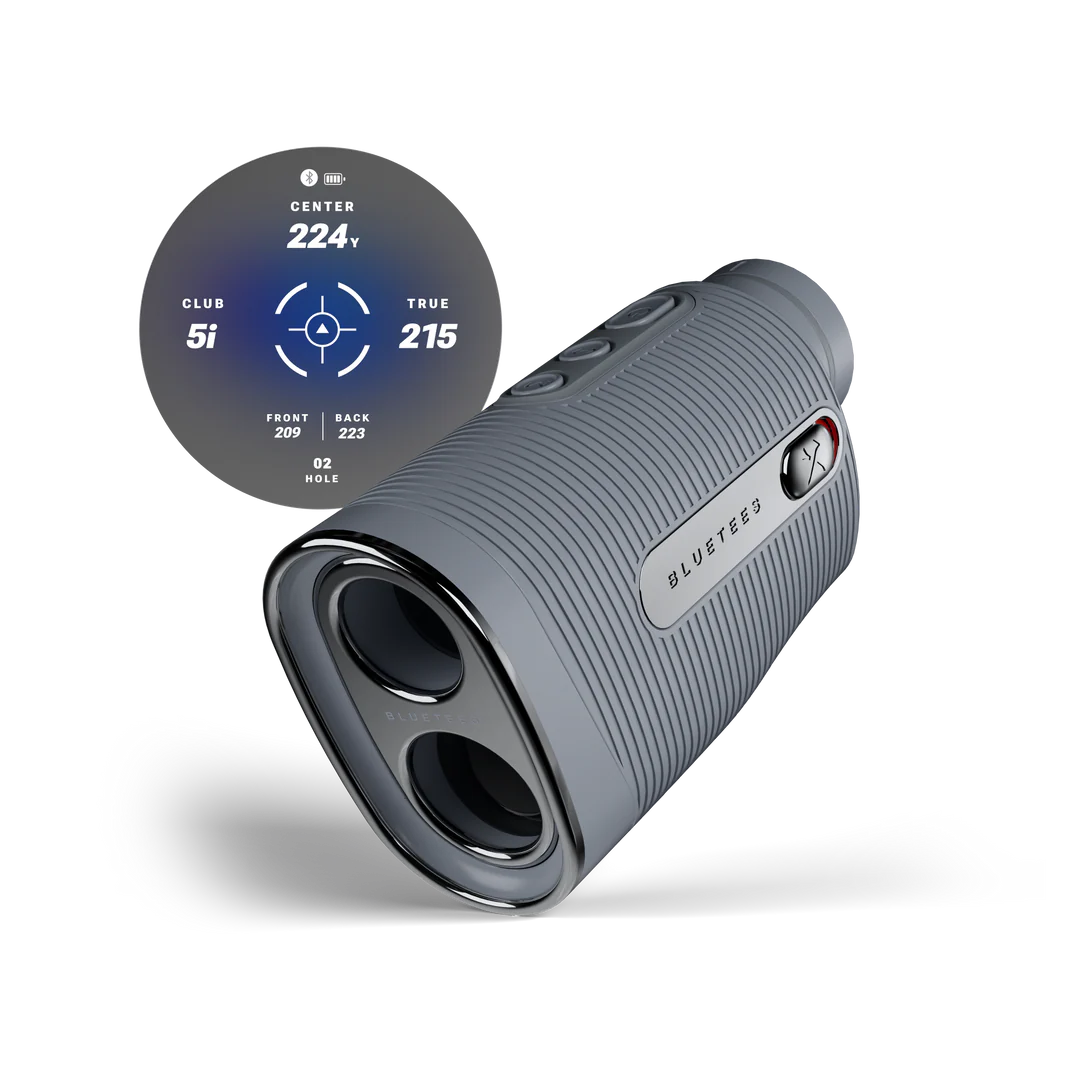 Recommended
Blue Tees Captain Air
Connected rangefinder with True Distance, AI club recommendations and IP65 waterproofing — £50 less than the Captain Pro
£249
Review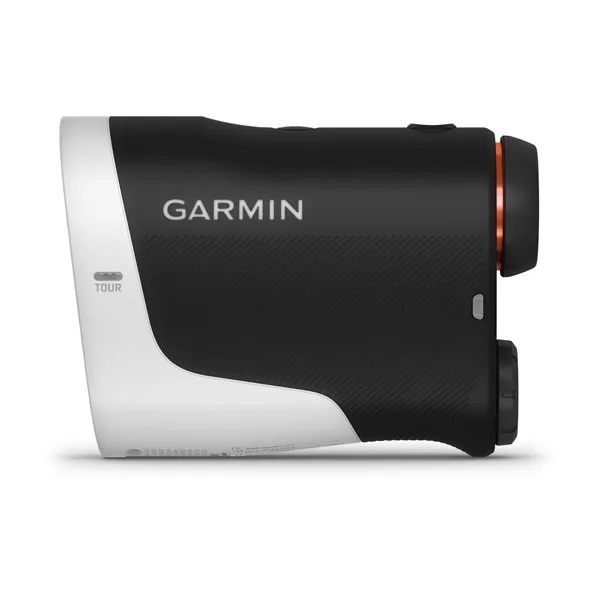 Recommended
Garmin Approach Z30
Garmin ecosystem laser — ranges to the pin and syncs distance to your Garmin watch or handheld
£329
Review

Sub-category · Smart / Connected
Smart / Connected
UK price range
£329 – £799
For golfers who want environmental data, including wind, conditions, and live updates, integrated into their rangefinder.
- Top Pick
Blue Tees Captain Pro
Connected rangefinder with True Distance, AI club recommendations, IP67 waterproof and 7x magnification — includes 1 year free analytics
£299
Review 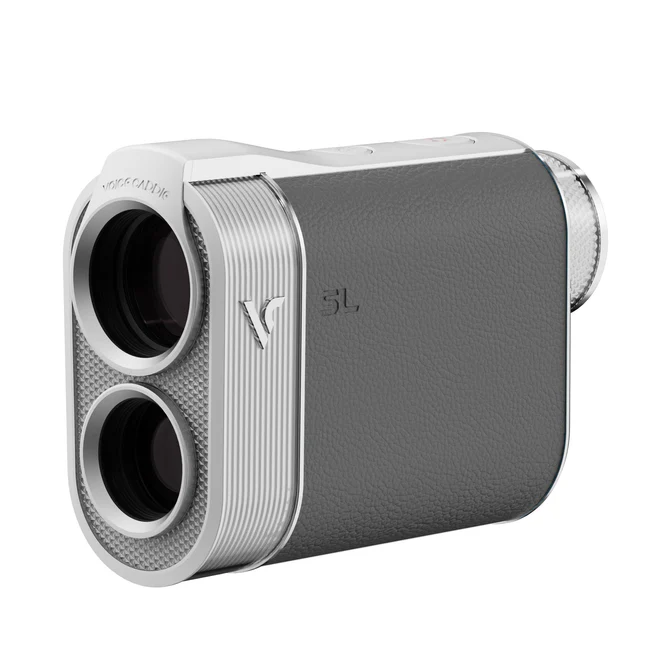 Top Pick
Voice Caddie SL3
The most feature-rich hybrid rangefinder available — full colour touchscreen, Smart Course View, Smart Green View and Smart Putt View
£449
Review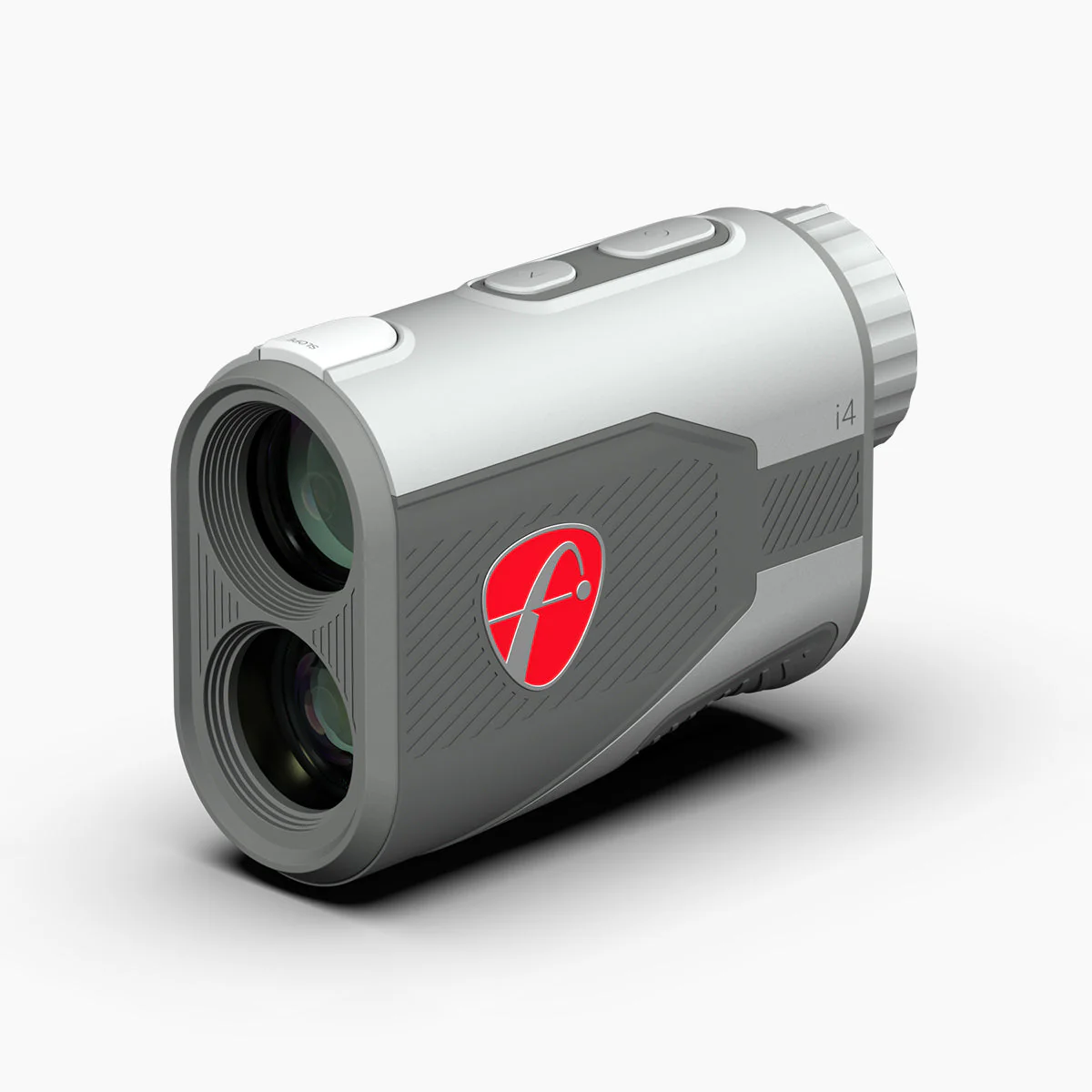 Recommended
FlightScope i4
Environmental Optimiser engine with real-time air density, wind integration and personalised club recommendations — from the makers of the Mevo launch monitor
£370
Review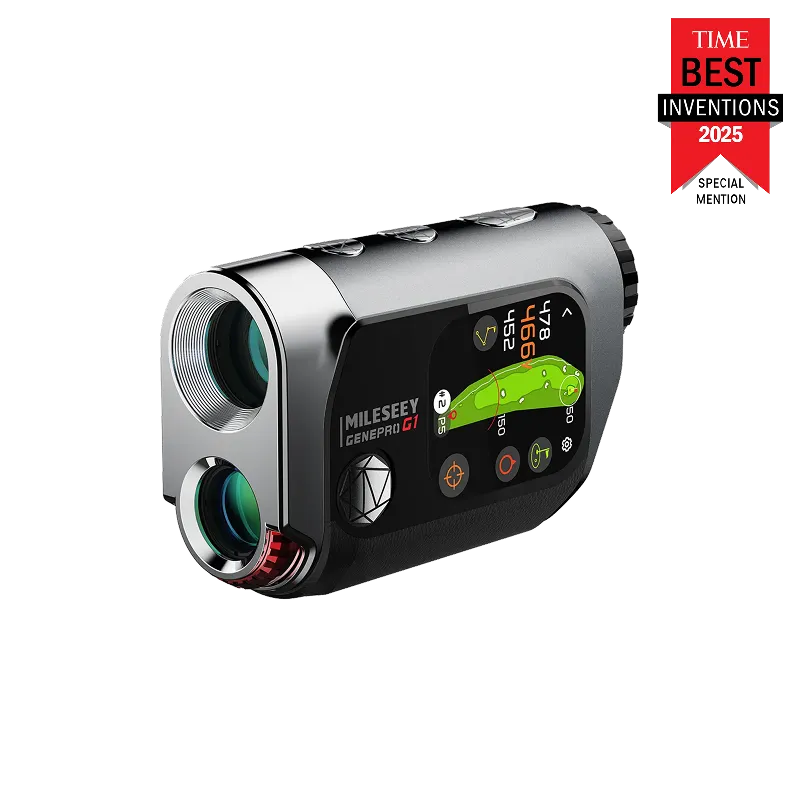 Recommended
Mileseey GenePro G1
World's largest rangefinder touchscreen — 2.13" AMOLED, 43,000+ courses without subscription, ±0.5 yard accuracy
£499
Review
About this guide
Independent, reader-supported, UK-focused.
TopSold Golf is independently owned and reader-supported. Our buying guides synthesise independent expert reviews, verified UK buyer feedback, and live retailer pricing, refreshed at the date shown above. We never accept payment for placement, and verdicts are unaffected by affiliate revenue.
How we rank
How rankings are calculated.
Rankings aggregate independent expert reviews and verified UK buyer ratings across five weighted criteria: accuracy, acquisition speed, low-light readability, ergonomics, and value. Each product's aggregated rating is normalised against the field within its sub-category and refreshed when new reviews or pricing data become available.
FAQ
Common questions about golf rangefinders.
- Are golf rangefinders allowed in UK club competitions?
- Yes. Under R&A Rule 4.3, distance measuring devices are permitted when the competition committee adopts the relevant local rule. The vast majority of UK club competitions use this local rule. Slope features must be completely disabled during competition; any slope rangefinder sold since 2016 can be made tournament legal by switching slope off.
- Do I need slope on my golf rangefinder?
- For most UK golfers, yes. British courses are typically undulating, from Yorkshire moorland to Surrey heathland to Scottish links, and slope-adjusted distances can differ from flat distances by 5–15 yards per shot. Slope can be disabled for competition play, so buying a slope rangefinder does not prevent you using it in your club medal.
- What is the best golf rangefinder for UK club golfers?
- For most UK club golfers, a laser rangefinder with slope priced between £150–£350 is the right choice. Top-rated models across independent UK reviews include the Bushnell Tour Z6 Shift, Shot Scope Pro L5, and Precision Pro NX10 Slope. For golfers who also want GPS course data, the Garmin Approach Z82 hybrid is the standout option.
- Laser rangefinder or GPS watch: which should I buy?
- A laser rangefinder gives exact distances to any target you can see, including the actual flag position. A GPS watch gives automatic distances to pre-mapped course features without aiming. For precise approach distances, laser is superior. Many golfers use both: a GPS watch for course overview and a rangefinder for approach shots. If choosing one device, a laser rangefinder with slope is the stronger choice for most UK club golfers.
Also in this series
Looking for distances on your wrist instead of in a viewfinder? Our GPS watches buying guide covers every major model available in the UK, from the Shot Scope G6 at £80 to the Garmin Approach S70 flagship, with the same independent, subscription-aware analysis.